Search This Blog

Saturday, April 18, 2015

Bush Terminal Park

A day in the life of a parks blogger:

Quietly, almost without telling anyone, a big new park opened just last fall on the waterfront in Sunset Park, Brooklyn. Absent the kind of fanfare (and controversies) that accompanied the High Line and Brooklyn Bridge Park – the brightest new stars in the firmament of New York City parks – Bush Terminal Park began welcoming visitors a few months ago, after a decade of planning.

bush terminal park sunset park brooklyn

It happened on the eve of a cold and seemingly interminable winter, during which, naturally, hardly anyone was thinking about parks. I was, of course. But I hadn't heard the news about Bush Terminal Park, also known as Bush Terminal Piers Park.

bush terminal park sunset park brooklyn

Fast-forward to last Friday morning. We've got the TV news on, and an item appeared on NY1's "Community Calendar" about an event at Bush Terminal Park in Brooklyn. I did a literal double take: There was a park in Brooklyn I'd never heard of? A park big enough to have an event in? Maybe it was a typo – maybe it wasn't a park, but a misprint for "Bush Terminal Armory," or "Bush Terminal Market," or "Bush Terminal Moraine." Or maybe it was a park, but in Brooklyn, Missouri.

As it turns out, Bush Terminal Park is very real and definitely in Brooklyn. I headed there that very same day, as the sunny afternoon faded into evening and a blustery wind made the upper-50s temperatures feel brisk.

bush terminal park sunset park brooklyn

The new park was built on a former brownfield site, which means it was contaminated by hazardous or toxic substances ("oils, oil sludges, and wastewaters" according to Wikipedia). The former Piers 1-4 now hosts restored tide ponds and beautiful blue water. Everything looks and smells nice. Still, the grassy rises near the water made me think about what might lie, or have lain, beneath.

bush terminal park sunset park brooklyn

Athletic fields take up big chunks of the park's 22 acres, but they're closed off and separate from the waterfront areas.

bush terminal park sunset park brooklyn

I wasn't surprised to see geese and ducks. In the next image, the strip of earth covered with netting is part of the fenced-off "Protected Natural Area No Access" – a part, I guess, of what the Parks Department website refers to as "a nature preserve that allows a fun glimpse into Brooklyn's wild side." Which is, as things look now, really pushing the point. But nature will take time to take its course!

bush terminal park sunset park brooklyn

I did hear and see some unexpected wildlife here, two kinds of non-urban-typical birds. One songbird flew into a high tree before I could get a good look or a photo, but these black birds were less shy, though hard for me to identify in this faraway image. Might they be rusty blackbirds?

bush terminal park sunset park brooklyn

One thing I didn't expect, after looking at the site on a map, was this great view of the Lower Manhattan and Jersey City skylines.

bush terminal park sunset park brooklyn

Another skyline view, from the south end of the park, takes in a small fraction of the enormous quantity of grey rocks that were employed in the construction and landscaping of the park. I'd be interested to know where they came from.

bush terminal park sunset park brooklyn

So what's Bush Terminal, and who was Bush?

Irving T. Bush began freight and warehousing operations here in 1895. After some struggles, his Bush Terminal Company became very successful. Wikipedia has a good history on its page about Industry City, the modern name for what the complex has become. The company headquarters, complete with a statue of Bush, still stands, just outside the entrance to the park.

bush terminal company sunset park brooklyn

Though today Industry City is noted for artists' studios and modern businesses, new york cross harbor railroad sunset park brooklynI gather from the Trainweb website that the modern-day New York Cross Harbor Railroad still floats goods, including steel and biosolids (fertilizer made from treated sewage), on rail cars between Brooklyn and New Jersey.

I habitually looked both ways before crossing these disused tracks. The local stray cats take no such cautions.

bush terminal company sunset park brooklyn

Not everything here has been preserved or refurbished.

bush terminal company sunset park brooklyn

But after seeing all the businesses closing up shop for the day, I didn't need Prosperity Noodle, way back up on Fourth Avenue, to tell me there's a lot more going on in Sunset Park in 2015 than Sunset Park.

sunset park brooklyn

One of the best things about my quest to visit every park in New York City is the history I uncover as a by-product, including recent history. If Bush Terminal Park had not come into being, nobody who doesn't work in the Industry City area would pass by this firefighters' memorial.

bush terminal company sunset park brooklyn industry city

The editor in me feels they deserved a possessive apostrophe and a correct spelling of "heroes." But the explorer in me is glad to know that it's here – along with all the rest of the history of Bush Terminal, which in its heyday had thousands of employees, its own police force and fire department, two power plants, restaurants, a bank, a trolley for commuting workers, and a longshoremen's hall. (I wonder what the longshoremen did in their hall. Did they drink mead?)

Don't be fooled by looking at a Google map: the only entrance to Bush Terminal Park is via 43rd Street. Take the R train to 45th or the N to 36th and walk west through the extremely un-park-like industrial district separating the neighborhood's commercial area from the waterfront and the new park. Enter through a gate that looks like it might be private, but isn't (you can tell from the bike-path markings).

In closing, here's a pump by the building with the fire department memorial. I have nothing to say about it. It just looks cool.

bush terminal company sunset park brooklyn industry city

Wednesday, April 15, 2015

Doughboy Park

There are lots of “doughboy parks” in New York City – parks with memorials to the young Americans who fought in World War I. Nine of them, according to the New York City Department of Parks & Recreation, including those at DeWitt Clinton Park and Abingdon Square. But only one is actually called Doughboy Park (the name Doughboy Plaza is also used), and if any place deserves the name, it’s this former WWI mustering ground in Woodside, Queens.

“doughboy

The monument itself features Burt W. Johnson’s sculpture of a soldier standing in a peaceful, almost devotional pose that’s unusual for this sort of statue. In my opinion it’s more affecting than the more active poses of other doughboy memorials.

“doughboy

Dedicated in 1923, the memorial has since acquired a very specific character, with a list (added in 2006) of the soldiers from the neighborhood who died in the Great War. According to the Parks Department, the American Federation of Arts named the Woodside Doughboy (originally called the Returning Soldier) the century’s best war memorial of its kind, and community members still gather here every Memorial Day.

“doughboy

Doughboy Park is adjacent to P.S. 11 and was originally a play area for the school, but after being judged too steep it became a city park. “doughboyThat doesn’t keep kids out, though, especially for an Easter egg hunt on Easter Sunday.

Aside from the somber doughboy himself, the park’s most striking feature is a large brick compass rose annotated with the names of the ancient Greek wind gods (the Anemoi), including my favorite, Zephyrus. Which Greek wind god is your favorite?

“doughboy
“doughboy

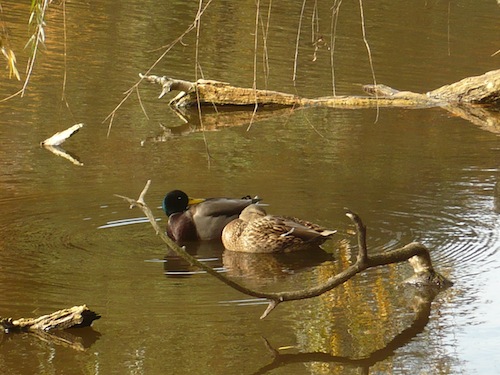
I love the design impulse behind features like that. It’s rare today. A Google Maps image shows that the points of the compass in fact do indicate north, south, east and west.
“doughboy

Getting a different kind of direction was a group of costumed young people rehearsing or videoing a performance of some kind.

“doughboy

One corner of the park hints at natural landscape and even wilderness. Cutting through this undeveloped area is a dirt trail that drew me inexorably along it as if I were hiking through the woods, even though it doesn’t really go anywhere at all.

“doughboy

Monday, April 6, 2015

Triangle Parks of Woodside

The Queens neighborhood of Woodside makes good use of its traffic triangles where streets cross at oblique angles. Several of these contain small memorial parks. Woodside Memorial Park and John Vincent Daniels Jr. Square honor war dead, and John Downing Park memorializes a firefighter.

“woodside

Woodside Memorial Park, also called Woodside Plaza, is a general war memorial honoring local residents who died in World Wars I and II, Korea, and Viet Nam. Its notable features are its blocks of schist which, unlike most such rocky New York City outcrops, are trimmed like hedges to fit in the sculptured landscaping. It’s a weird effect.

“woodside

I don’t imagine the water fountain gets much use. I always take note of these, though, because I’m glad they still exist amid the enormous bottled water scam that’s bamboozled our whole misguided nation.

“woodside

One stop away on the #7 train you’ll find John Vincent Daniels Jr. Square and John Downing Park. Daniels was a Woodside resident who died near the end of World War I. His triangle is a relatively large one, large enough for its own page on the Parks Department website, and his memorial is a relatively new one, which is clear from its mention of “World War I.” Most such memorials around the city refer to the Great War. Who in the 1920s imagined that after the horrors of the “war to end all wars” another such conflict could ever happen?

The Board of Alderman named the site in 1933, “to pay tribute to a son of Queens County who made the supreme sacrifice in the World War.”

“John

We have Maurice E. Connolly, Queens Borough President from 1911 to 1928, to thank for the parcel’s initial development as a park. Connolly was later convicted for his part in a sewer graft scandal, despite being represented by Max Steuer of Triangle Shirtwaist Fire fame. Do ill-begotten sewers run underneath John Vincent Daniels Jr. Square (which is, in fact, a triangle)? Maybe. But the upshot, a nice little park, is nicer to think about.

“John

The much smaller triangle of John Downing Park honors Firefighter John Downing, who died in the line of duty on June 17, 2001.

“John

This park is so small the benches are on the outside. But no park is too small to show signs of spring.

“John

Friday, April 3, 2015

DeWitt Clinton Park

How could I not go to a park on the first full day of spring? Never mind the snow cover from the previous night. Winter encroached much too far into spring this year, but that wasn't going to keep me away from DeWitt Clinton Park. This West Side spot is the latest in a series of Manhattan parks I have learned about after naïvely concluding that I had visited every park in the borough.

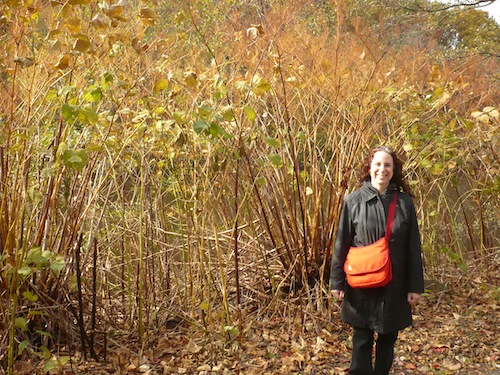
The playground was deserted, no surprise on this chilly, wettish day. But that made the outcropping of Manhattan schist all the more prominent.
dewitt clinton park
dewitt clinton park manhattan schist

Striking in a different way was the athletic field, where a couple of intrepid soccer players refused to wait for the grass to reappear, and the baseball diamond, where practice had already begun.

dewitt clinton park soccer
dewitt clinton park baseball

Dogs, too, didn't mind the cold ground. A pack of small pooches squabbled at the entrance to the dog run.

dewitt clinton park

The plaza on the east side of the park where humans sit during nicer weather was quite deserted, though.

dewitt clinton park

And Maria Clinton's Perennial Garden awaited warmer days.

dewitt clinton park maria clinton's perennial garden

Maria Franklin married DeWitt Clinton in 1796, before DeWitt became a Senator, Governor of New York, and the driving force behind the construction of the Erie Canal. I assume the garden is named for her, and not for any of the myriad modern-day Maria Clintons I can find on Facebook.

DeWitt Clinton Park also has one of the nine doughboy statues who stand guard over New York City's parks. The Clinton District Association commissioned the Clinton War Memorial, with a statue sculpted by Burt W. Johnson, to commemorate the neighborhood's World War One dead. It was dedicated in 1930.

dewitt clinton park doughboy clinton war memorial

What's this? I don't know. The easiest maze in the world? (There's only one path you can take to the center.)

dewitt clinton park

Giant burls like the one on this otherwise unremarkable plane tree always catch my eye. I guess it's just interesting to note how the stoic tree doesn't seem to mind at all.

dewitt clinton park

Nearby are the Clinton Park Stables, where the Central Park carriage horses are kept. I don't know whether these equines were heading home or just out for a walk. Whatever the circumstances, they did offer a reminder of the New York City of old.

dewitt clinton park stables

Saturday, February 21, 2015

Swinburne Island

While not parks per se, Swinburne Island and Hoffman Island, east of Staten Island's South Beach and west of Brooklyn's Sea Gate and Coney Island, are managed by the National Park Service, mainly for the benefit of birds. But in recent years the smaller of these two former quarantine islands has become an important home to New York City's newly thriving population of harbor seals. Last weekend New York City Audubon sponsored a Winter Eco-Cruise via New York Water Taxi to observe the seals at Swinburne.

swinburne island

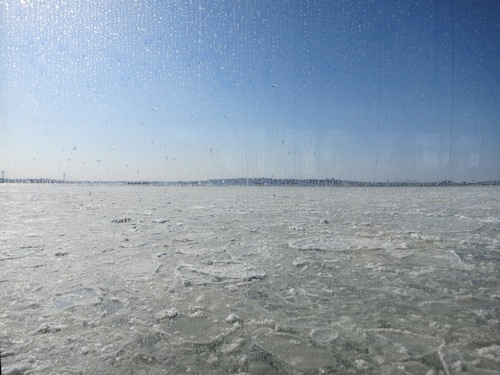
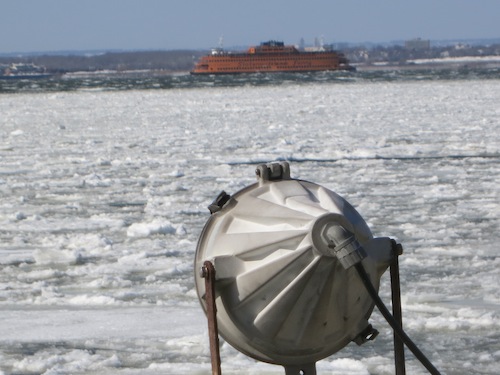
It was a frigid February day with a freakish amount of ice floating in Buttermilk Channel and other parts of the harbor. I felt like I was on an ice-cutter in the Arctic. I don't know much about boats, so it was interesting (and gratifying) to see that New York Water Taxi's yellow boats were equipped to push through fields of floating ice.

swinburne island

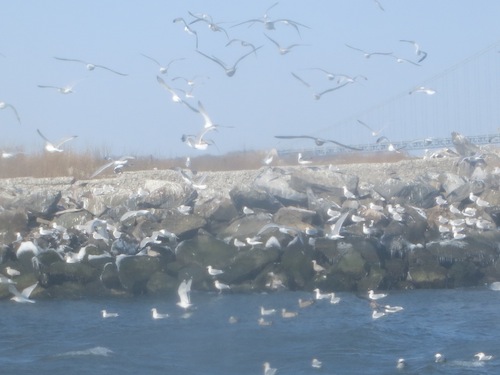
The bitter-cold wind kept us in the boat's warm interior for much of the trip, and the spray on the windows often froze into a temporary glaze. Still we had plenty of opportunity to observe the many species of birds the Audubon guide pointed out – cormorants, merganser ducks, hawks, grebes, and brants to name just a few. And when we arrived at Swinburne the crowd of gulls was a sight to behold.

swinburne island
swinburne island

Though long since abandoned, some of the four-acre island's buildings had stood until Hurricane Sandy flattened them in 2012. Created out of landfill in the 1870s, the islands were used to quarantine immigrants with contagious diseases, and victims of the cholera epidemic of 1910-11. According to Untapped Cities, which has some warm-weather photos of the islands and more details on their history, "Swinburne Island housed a hospital dedicated to cholera and yellow fever cases, a crematory, and a mortuary. Here, patients were fumigated with sulfur, and those who passed away on the island went to either the mortuary or crematory, depending on the season as well as the preferences of their relatives or friends."
Hoffman Island was later used as a military training facility.
As for Swinburne Island's 21st-century seals, we saw not a one, though the guide did profess to spot a seal poking its head up from the water for a breath of air. It may be that the rocks of the island were too icy for the pinnipeds to get comfortable perches. Whatever the cause, our band of 40 or so hardy human souls saw no seals that shivery day.

verrazano bridge
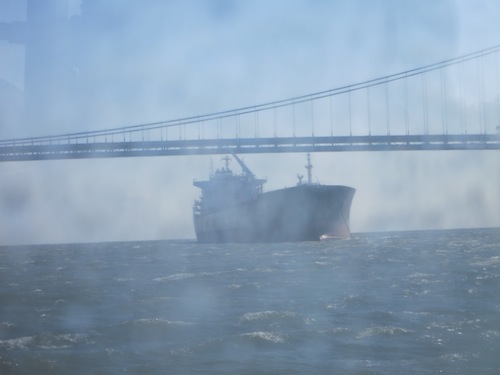
Oil tanker near the Verrazano Bridge

Wednesday, December 10, 2014

Clove Lakes Park

There are no cloves in Staten Island's 193-acre Clove Lakes Park, which includes a 131-acre New York City Forever Wild preserve. The name comes from the Dutch word "kloven," which means cleft and refers here to the valley between Emerson and Grymes Hills. A brook that used to run through the valley was dammed over the years, creating the lakes and ponds that give Clove Lakes Park the other part of its name. More details on the history of the park, which began its history as such in the 1930s, are at the Parks Department website.

clove lakes park staten island

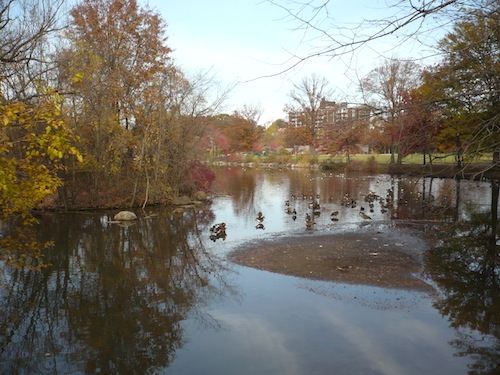
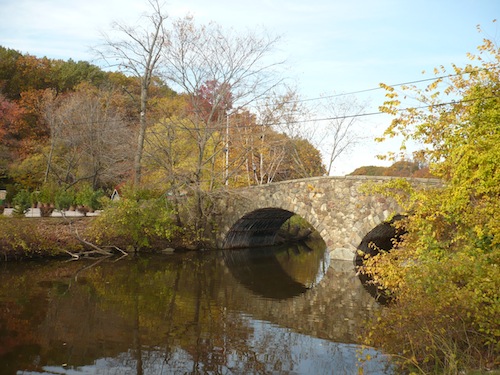
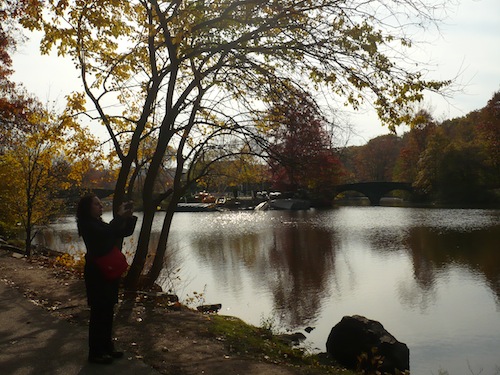
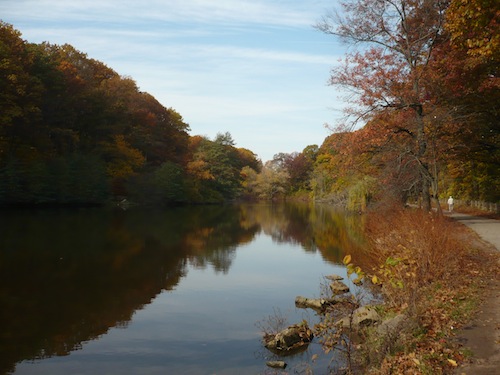
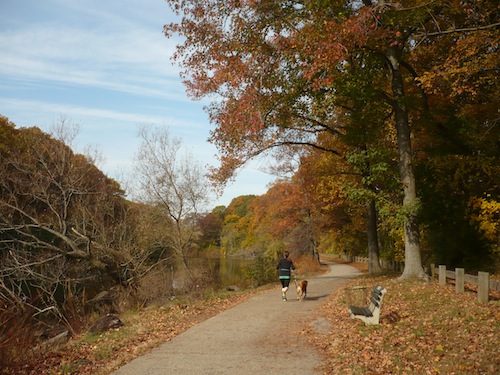
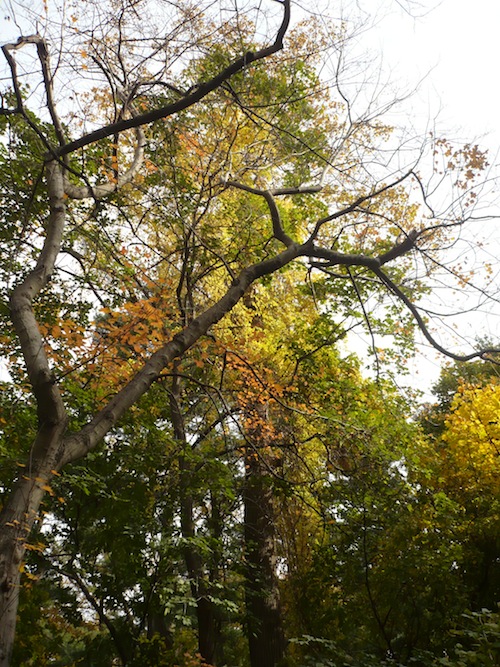
The southernmost lake in the park is Clove Lake. On a sunny day in early November, fall colors made for some gorgeous lighting.

clove lakes park staten island

A dirt path for running is a luxury most Manhattanites like me don't have nearby. Makes me wish Clove Lakes Park was an easy walk from the Staten Island Ferry.

clove lakes park staten island

The northwest part of Clove Lakes Park is home to a tulip tree known as Staten Island's largest living thing, 107 feet tall and at least 300 years old. We looked for it without success, though it may have been unmarked among the scrambles of tall straight trees in the woods.

clove lakes park staten island

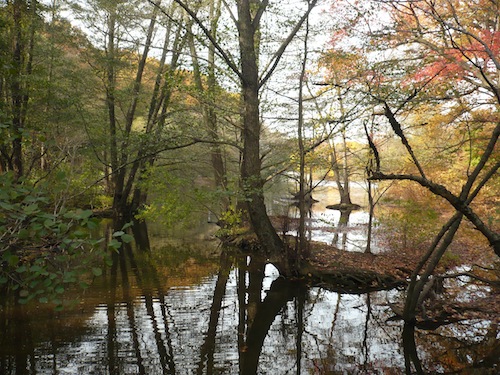
More striking were these less grand but curiously-situated trees growing out of the water. They reminded me of Florida's mangroves.

clove lakes park staten island

Ducks find nice hideaways along the eastern edge of Clove Lake.

clove lakes park staten island

The reeds grow tall along Martling Lake, the middle of the park's three main bodies of water.

clove lakes park staten island

It was a good day for a brisk walk in the woods, with just enough people around to make the place feel active without anything remotely like a crowd.

clove lakes park staten island

If all these living things get too much for you, there are cemeteries around too. St. Peter's Cemetery dates from 1848 and is, according to Wikipedia, Staten Island's oldest Catholic burial ground. Abutting the eastern edge of the park and thus providing a nice view for any restless departed, it still welcomes deceased Staten Island Catholics.

clove lakes park staten island

Going back further in time, you can hunt down the remains of the Old Clove Baptist Church Cemetery (1809) just outside the park's southeast corner. Evidently there isn't much to actually see there, though. And that elusive tulip tree at the opposite end of the park is a good century older even than the Baptist cemetery.

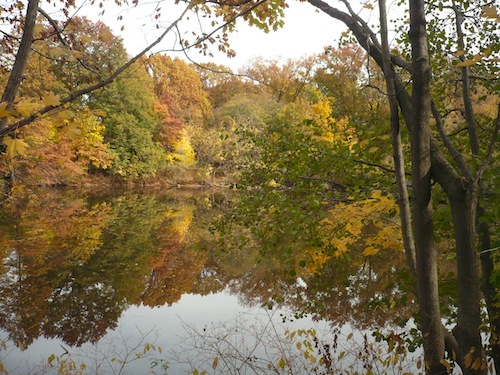
So instead of dwelling on final dwellings, let's look at these fall colors reflected in the waters of Brooks Lake, the northernmost of the lake trio:

clove lakes park staten island

The ice skating rink at the southern end of the park was just getting going for the season. Jingoistic country music was blasting from the sound system as a handful of people tried out the ice, a reminder that we were in New York City's red borough. It wasn't the sort of accompaniment to which skaters in Prospect Park or Central Park would expect to be slip-sliding away.

clove lakes park staten island

We took our leave of Clove Lakes Park fully aware of the plethora of parks we still have to explore in Staten Island. But have no fear: As more of our friends get priced out of Brooklyn, I expect to have more and more people to visit on Staten Island, NYC's greenest borough.

clove lakes park staten island

Monday, December 1, 2014

Gil Hodges Community Garden

Once again I'm breaking my rule and covering a community garden. This time it's because the Gil Hodges Community Garden in the Gowanus neighborhood of Brooklyn is unlike any other space I've come across in the city.

The garden was founded in 1992, 20 years after the death of Gil Hodges, the Dodgers star and manager of the World Series champion 1969 Mets. Also known as the Carroll Street Garden, this spot became in 2013 the first of New York Restoration Project's community gardens to implement a storm water management system. By capturing storm water runoff it helps prevent untreated water from entering the nearby Gowanus Canal, which has been the subject of a huge cleanup project for many years.

The plants nurtured here seem to have been selected for their evocative names: sweetbay magnolia, mountainmint, orange azalea, ruby spice summersweet. It's almost enough to make you suspect the names were made up just for their sound.

gil hodges community garden carroll street garden

Something about the design of the garden's shed struck my fancy. Here it is in all its architectural glory.

gil hodges community garden carroll street garden

Letting my imagination run a little wild in the patio area, I was reminded of the courtyard of an Italian abbey.

gil hodges community garden carroll street garden

Next up, I'll be getting back to actual parks, with a visit to park-rich Staten Island. But I felt this community garden unlike any other was worthy of a pause and a note.