Search This Blog

Loading...

Friday, May 10, 2013

Queens Botanical Garden

I freely admit I didn't know there was a Queens Botanical Garden until a couple of weeks ago. I was looking at a Google map to see how to get to Flushing Meadows Corona Park by subway, and there it was, just off the big park's eastern border: a botanical garden of Queens' own. Naturally, a visit was in order, and it became the first stop on our Cinco de Mayo visit to what is popularly known as the most ethnically diverse county in the nation.

A day that unfolded into a celebration rooted in Mexican heritage actually began with a very slow walk through the packed sidewalks of the heart of Flushing's Chinatown.

After we charged our batteries on some doughy Chinatown snack foods…

…we arrived at the Promised Land.

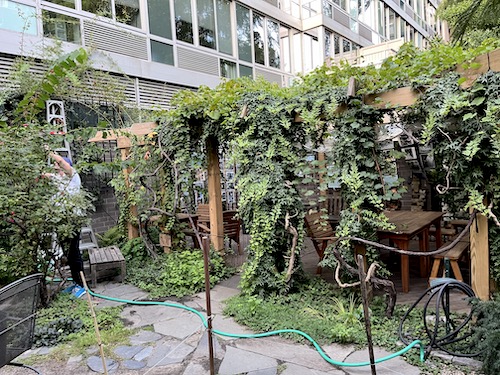
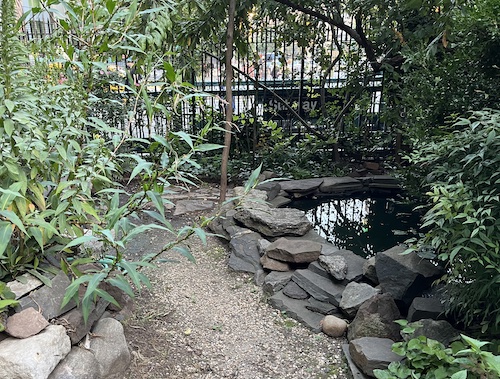
The QBG doesn't have the size, the grandeur, or the fame of its Bronx and Brooklyn brethren, but it's got spring colors, and trees with character.

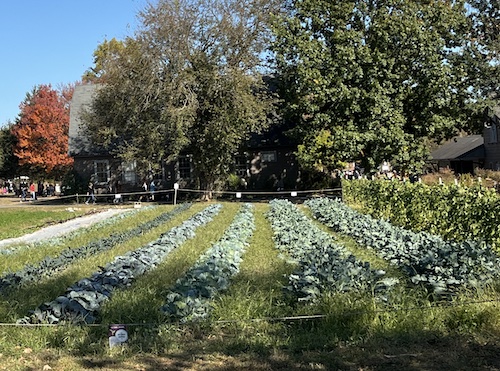
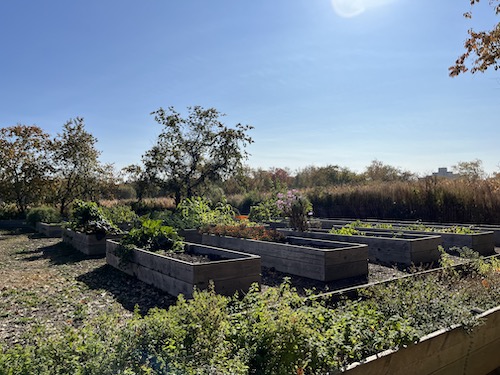
The origin of the QBT lies in a "Gardens on Parade" exhibit created for the 1939 World's Fair, which was preserved and then, in preparation for the 1964 Fair, moved to its present 39-acre site east of Flushing Meadows. The open, western part retains an "unfinished" quality (though additional landscaping and development are planned) that contrasts with the tight cluster of gardens near the Main Street entrance. The latter include bee, herb, rose, and vegetable gardens along with a beautifully landscaped area called – no beating around the botanical bush in Queens – the Wedding Garden.

One thing I've never seen anywhere else is a Parking Garden.

When we first saw this on the QBG map I thought it might just be a botanical-garden joke, akin to calling your toilet a "porcelain throne," but no: It's a parking lot that uses "innovative building techniques and materials to manage storm water on site, conserve electricity, and reduce our global footprint by fighting urban heat island effect." (That's according to an informational video on the QBG website.) I don't know if it works, but if you've ever returned to the city late on a summer day after spending most of it somewhere closer to nature, you may have noticed "urban heat island effect."

This is a pretty good place to escape anything like that.

Tuesday, May 7, 2013

Flushing Meadows Corona Park

We picked a sunny spring Sunday to visit Flushing Meadows Corona Park, the second-largest park in New York City. We had also, without realizing it, picked Cinco de Mayo. And where does the big Cinco de Mayo celebration in these parts take place? You guessed it: Flushing Meadows Corona Park.

In the next photo you can see the Unisphere in the distance behind the revelers. The little circle above and to the left of it isn't a newly acquired moonlet; it's a volleyball. (I carefully snapped this shot just as the ball arced into the air. Feel free to appreciate my extra effort to get the "action shot.")

And speaking of things arcing into the air and me reacting: the movie Iron Man 2 features a splendid fantasy re-creation of the Unisphere and the New York State Pavilion, the most famous of the structures that linger here from the 1964 World's Fair in various states of decrepitude. The Unisphere has been refurbished and looks fantastic, but it seems it hasn't made economic sense to do anything with the Pavilion and its famous floor mosaic. Presumably it will just crumble to ruin eventually.

Promoted by Robert Moses, the New York World's Fairs of 1939 and 1964 birthed this 1,255-acre park on what had once been a big expanse of more-or-less undeveloped meadows, then a dumping ground (F. Scott Fitzgerald's "valley of ashes"). Though it lacks the artistic landscaping of the great Olmstead and Vaux parks (like Central and Prospect), it's huge, heavily used, and highly valued by the people of Queens. Visitors from elsewhere find themselves on park grounds when they visit Citi Field to see the Mets, the USTA Billie Jean King National Tennis Center to see the U.S. Open, the New York Hall of Science, the Queens Museum of Art, or the Queens Wildlife Center (more humbly known as the Queens Zoo).

It's no surprise, then, that a proposal to build a new Major League Soccer stadium on the grounds has met with (I suspect futile) opposition from park lovers. So much of the space has already been eaten up by large facilities.

We entered from the east side, walking under the thundering traffic of the Van Wyck Expressway and the higher thunder of the jets out of LaGuardia Airport. A relatively peaceful strip of parkland greeted us, before we encountered the Cinco de Mayo crowds.

Special day or no, soccer players were everywhere.

The southern section of the park, with Meadow Lake (NYC's largest lake) and Willow Lake, seemed to be inaccessible, or in any case we couldn't get to them through the festival crowds. We'll have to visit them another day. Industry Pond, from the World's Fair, was the only body of water we managed to visit.

The 43-foot Rocket Thrower, by Donald Delue, also dates from the 1964 World's Fair.

Here's a springtime view of the towers of the Pavilion through the trees:

Famed architect Philip Johnson designed the Pavilion, but his honored ghost has no power to get you into it or up into the towers any more. (Not if you're a civilian, anyway. A friendly NYPD officer told us she'd once been assigned to a police post up there during the U.S. Open tennis tournament.)

The round building on the left is the Queens Theatre, with the rusting rings of the Pavilion behind.

And this is just about as close as you can get to the Pavilion now:

Forgotten NY has more information on the past and present of the Pavilion. But you can see it for yourself, and the rest of this huge park, any day – even Cinco de Mayo.

Monday, April 29, 2013

Chelsea Waterside Park

I only just realized this park by the Hudson River, just north of Chelsea Piers, had its own identity and wasn't simply part of Hudson River Park. Shows you how much I know. And I live half a block from Chelsea.

The Hudson River Park Trust administers Chelsea Waterside Park, which has its own page on the Parks Department website and its name engraved in a wall by the entrance. If you ask me, that makes it a park.

The original parcel became a Parks Department site back in 1915, and when Tammany Hall boss Thomas F. Smith died in 1923 it was named for him. Expanded, renovated, and with its new name, it reopened in 2000 with new facilities. An early spring visit rewarded me with the sight of this blossoming tree.

There's landscaping too, but it wasn't in color so early in the season, so I won't trouble you with a photo. Dog runs are more fun to look at, anyway. In fact they can provide a city explorer with hours of entertainment.

But this dog, like Rudyard Kipling's cat, walks by himself. (Or perhaps, like Bartleby, would just prefer not to.)

Chelsea Waterside Park provides a nice view of the fireboat John J. Harvey and the lightship-turned-bar Frying Pan (where, incidentally, I recommend steering clear of the mixed drinks and sticking with beer).

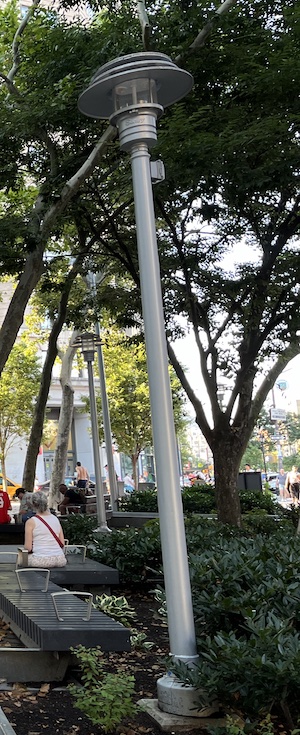
A sagging section of fence had admitted dozens of springtime revelers the day I came by. On a big undulating swath of grass clearly not intended for present use, frisbees flew, children kicked balls, families picnicked. It was one of those rare occasions in our litigious, nannified society when I observed people getting to play unsupervised, so to speak. A freak event? An oversight? Had the entire universe turned inside out and upside down? I wasn't sure, but it was nice. Incidentally, I'm also a fan of these art deco lamp posts that line the Hudson River parks. They make me want to retrieve my old rubber gorilla from the distant past and climb it up.

Friday, April 26, 2013

Brooklyn Botanic Garden

I loved going to the Brooklyn Botanic Garden when I lived in that borough. I went for cherry blossom season, for the chili pepper festival, for special exhibits. I still love the place, but hadn't been there in some years when I paid a recent visit on a cloudy day, before the cherry blossoms, but on one of the spring's first nice weekends.

The place seemed smaller than I remembered, and I covered just about the entire grounds in a determined walkabout of something over an hour. The fact that the cherry blossoms hadn't yet appeared didn't mean there weren't beautiful colors to appreciate:

And plenty of green.

In the above photo you get a glimpse of the water and, to the right, you can just make out the red archway of the Torii (gateway) in the Japanese Hill-and-Pond Garden. This is the first Japanese garden I remember ever seeing, and even though I've now seen other nice ones, I can still sense a certain magic here. Is it the shimmering water? The fish? The lovers?

The Shakespeare Garden grows flora mentioned in the works of the bard.

There's something to be said for a time when only a few trees have flowered. They catch your eye individually and you can appreciate them that way.

Of course, there's the glassy conservatory. This is a botanic garden after all.

I go up to the trees and I look at the little placards stating what they're called. I look, and I forget. This one is called a "tree":

But sometimes I take a photo of a sign so I can later identify the tree in the picture. Half the people you meet in New York came from somewhere else; this gorgeous tree is a Wisconsin weeping willow.

Botanica aficianados come from miles around to check their email in the Rock Garden.

"Poisonous if eaten." Not everything here is thoroughly benign.

And come to think of it, this Oriental Ash tree looks as if it could pick you up and squash you. Like something out of the murky forests of Oz.

And I like spiders, but this giant one might strike fear into the heart of an impressionable young primate even if it really is just an overgrown planter.

There are trees here with so much character, it feels like they belong on stage. Maybe in the Shakespeare Garden.

I finished my circuit and arrived back near the visitors' center and this pink-blooming tree, which now had a little girl perched in it. Shortly afterward, a security man came by and made her get down.

And I paid a closing visit to the Native Flora Garden, where from certain angles you could almost be in an original wilderness. Except for the explanatory placards, of course.

On my way out these flowers caught my eye:

And I spotted something I had never noticed before: an aging sign paying tribute to the Brooklyn Botanic Garden's precursor, an early botanic garden founded in 1825 by Belgian-born Brooklynite Andre Parmentier in a nearby neighborhood. What's at Carlton Street south of Atlantic Avenue now? Train yards and part of the Atlantic Yards development grounds. If that garden was still here, it would be right next door to the Barclays Center. And where better to leave you, as we conclude our tour of the Brooklyn Botanic Garden?

(Hey, only two months until the NBA Draft.)