Search This Blog

Monday, April 29, 2019

High Rock Park and Moses' Mountain

Once owned by the Boy Scouts Council, then the Girl Scouts Council, High Rock Park is today the centerpiece of the Staten Island Greenbelt. Though only 94 acres, it provides one of New York City's best "walk in the woods" experiences. Stride through the Gretta Moulton Gate, and you feel you've really left the craziness of the city behind.

high rock park staten island greenbelt nyc moulton gate

In late March, last fall's leaves still lie thick on the ground, with the new year's foliage yet to appear.

high rock park staten island greenbelt nyc

But green shoots underfoot announce that spring has sprung.

high rock park staten island greenbelt nyc

And so do the frogs in Loosestrife Swamp, a short walk from the park's entrance. (Turn up the volume!)

Follow one of the marked trails west, cross Manor Road, and you'll bump into Moses' Mountain. This 260-foot hill is made of rock excavated for the construction of the Staten Island Expressway and named, of course, for NYC's legendary Parks Commissioner Robert Moses. Along with Gretta Moulton and others, the Power Broker had a hand in preserving this area as parkland in the 1960s.

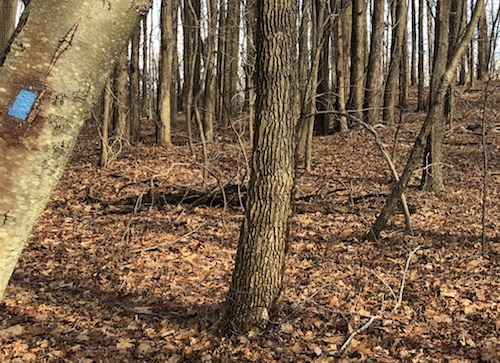
We missed the quick left turn to the path that spirals up the hill, and ended up circling the rise for a while before we found the way.

moses' mountain high rock park staten island greenbelt nyc

God wasn't helping.

moses' mountain high rock park staten island greenbelt nyc

But we encountered a couple of like-minded outdoorsfolk who pointed the way. A short climb later, we summited.

moses' mountain high rock park staten island greenbelt nyc

Eureka!

moses' mountain high rock park staten island greenbelt nyc

The "360-degree panoramic view" lauded on the Greenbelt website is, let's be honest, underwhelming.

moses' mountain high rock park staten island greenbelt nyc

But my sense of accomplishment was surprisingly strong at having climbed such a tiny "mountain." I think that was because of where we were: Staten Island. New York City. High above sea level, without being in a building. Without a building in sight. In the presence of nature's elements, witnessing their reckoning with the changing seasons. Lifting our bodies into the clean air.

moses' mountain high rock park staten island greenbelt nyc

Postscript: The day we visited High Rock Park and Moses' Mountain we had lunch at our favorite Staten Island restaurant, the fabulous Sri Lankan eatery Lakruwana. Since then, the horrific mass murders in Sri Lanka have put that country on the map in people's minds around the world. Park Odyssey would like to extend our appreciation, and sympathies, to NYC's Sri Lankan community. Whatever your religion and whyever you came, we're glad you're here.

Monday, April 8, 2019

Ford Foundation Atrium

Indoor parks in New York City? Well, yes – after a fashion. We've already seen a mobile micropark (the adorable Healing Garden, which lives inside a trailer). On a much grander scale is the Ford Foundation Atrium, inside the Foundation's headquarters on East 43rd St.

ford foundation atrium manhattan nyc

The Ford Foundation Center for Social Justice inhabits a 12-story box of steel, granite, and glass built in the 1960s. The award-winning landmarked building was immediately recognized for its creative architecture. As an aesthetic object it stands taller than countless much bigger NYC office buildings.
Shortly after the building opened in 1967, the Architectural Record opined: "Kevin Roche's design for the new Ford Foundation headquarters is a unique symbolic expression that designates a new kind of urban space...highly charged with a symbolic content that invests the most ordinary aspects of the building's life with an almost ritualistic significance."

Equally impressed, Ada Louise Huxtable wrote in the New York Times that "this civic gesture of beauty and excellence...is a grant of some importance [to New Yorkers] in a world where spirit and soul are deadened by the speculative cheapness of the environment." The Pulitzer Prize-winning critic couldn't have known at the time how thoroughly "speculative cheapness" would come to infect nearly every aspect of our country, well beyond the bounds of the business world.

The winter garden inside welcomes the public Monday through Saturday, except when special events are held.

ford foundation atrium manhattan nyc

A reflecting pool at the lowest level provides a focal point and a sheen of calm to a busy day.

ford foundation atrium manhattan nyc

A slow walk up and down the atrium's paths and stairways, winding among its dozens of plant species, provides a sweet and unusual respite from the pace of the city. Any time you're on the East Side in the vicinity of Tudor City and the UN, rest your soul at this indoor oasis, a park in all but name.
Ready to speed up again? Watch the Ford Foundation's time-lapse video of the blank space becoming a refulgent garden.
Friday, March 29, 2019

The Tudor City Greens

Tudor City, the housing complex on Manhattan's East Side near the United Nations, isn't just a quiet, rather insular neighborhood of co-ops, 1920s brick architecture, and landmarked facades.

tudor city greens manhattan nyc

Tudor City was marketed when it opened in the 1920s as "An Ideal Residential Development Within a Few Minutes' Walk of the Business Center of the Greatest City in the World." It's been on the National Register of Historic Places since 1986, and an official New York City Historic District since 1988. I was aware of Tudor City but had never visited, and I certainly never knew that it includes the Tudor City Greens, two adjoining little parks along Tudor City Place, privately owned, open to the public, and run by a nonprofit.

tudor city greens manhattan nyc

Crocuses (I think that's what these are) were blooming on a sunny day in March.

tudor city greens manhattan nyc

And despite the chill, a few sunny souls were enjoying a sit.

tudor city greens manhattan nyc

The developers of Tudor City couldn't take advantage of the nearby East River views because the intervening land, now the UN, was "the site of stinking slaughterhouses and meatpacking facilities, and a gas works," according to Brick Underground. Instead the apartment buildings were designed to look out over the burgeoning city neighborhoods to the west.

Today, for river views, this is the best you can do from the street:

tudor city greens manhattan nyc

Fred F. French, the founder of the company that developed Tudor City, was, according to The Real Deal, "[b]orn into poverty" and "had to go to work as a young boy, selling newspapers and doing odd jobs to help support his family. Yet he also managed to stay in school, and eventually study engineering at Columbia University." Just like today's most famous real estate mogul, no? How times have changed. When French died in 1936, his estate was valued at "less than $10,000 in personal property and no real estate."

You may know about the popular Showtime TV series The Tudors. You probably don't know that early music choral group New York Polyphony has an album called Tudor City, which "explores the music of Tudor England" through "chant, polyphony and renaissance harmonies." (Readers of my reviews at Blogcritics know that I frequently cover this kind of music.) It seems old Tudors never really die, whether in the Old World or the New.

Wednesday, February 6, 2019

LaTourette Park

In LaTourette Park, an important chunk of the Staten Island Greenbelt, you'll find hiking trails, a golf course, and, yes, Revolutionary War history.

latourette park staten island greenbelt nyc

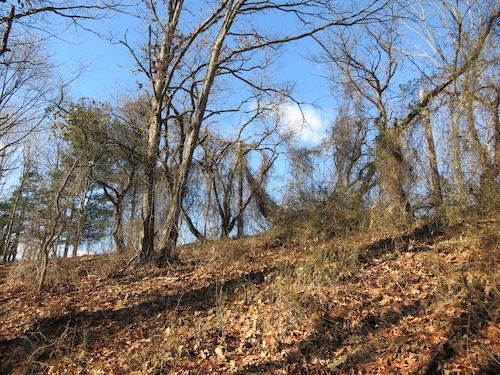
A mild day in early January gave us an unexpectedly temperate chance for a mini-hike through some of this huge park's 760 acres. The British used the scenic ridgetop of present-day southwest LaTourette to watch for approaching American troops. The park's "blue trail" takes walkers to this panoramic view, with (unseen) Richmond Creek below.

latourette park staten island greenbelt nyc

This video captures a bit of the narrow trail and surroundings.

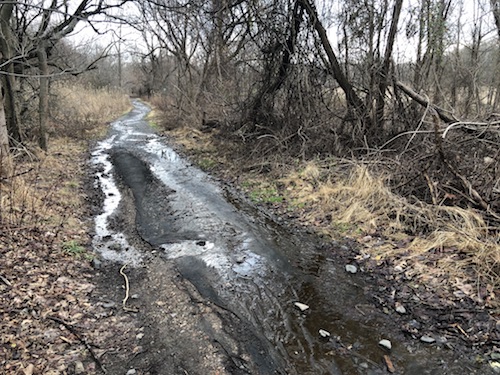
Some bits were nearly swamped. With the thick growth all around, even when the trees are denuded of leaves you can feel tightly bound in the woods.

latourette park staten island greenbelt nyc

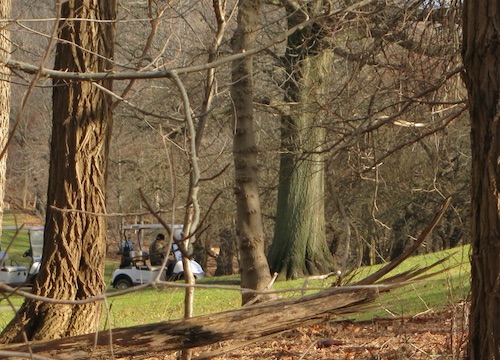
Yet walk a little further, or just look the other way, and you're in golf country.

latourette park staten island greenbelt nyc

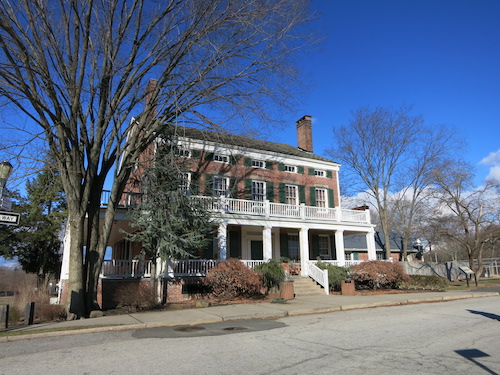
The LaTourette family sold the city their farm in 1922. It became a park in the 1950s. The 1870 LaTourette Mansion still stands. Now it's the golf course's clubhouse.

latourette park staten island greenbelt nyc

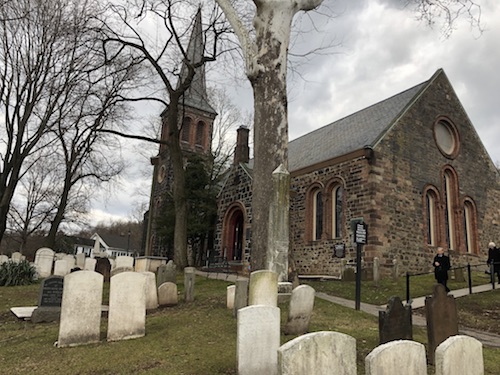
Here at the park's southern edge you're also just steps from the beautiful old Church of Saint Andrew – which lies inside the park – and Historic Richmond Town with its preserved municipal and farm buildings.

historic richmond town staten island nyc

The original St. Andrew's Church building goes back to the beginning of the 1700s. According to a plaque, "During the Revolutionary War, the church functioned as a hospital for the British and was the scene of a battle in 1777 when Americans attacked the British troops who had barricaded themselves inside the building."

saint andrews church latourette park staten island greenbelt nyc

There's no mention of the outcome. The immediate outcome, that is. We know what happened in the end, of course.

hamilton

We had hoped to park our car by St. Andrew's, where there's a rustic-looking path into the park, but as it was a Sunday the lot was reserved for churchgoers. We ended up leaving the car some distance away, a couple of blocks past another church (St. Patrick's). Sometimes it takes a little ingenuity to get yourself to a particular park in the wilds of Staten Island when you're from another borough. But it's nearly always worth it.

Friday, December 7, 2018

West Harlem Piers Park

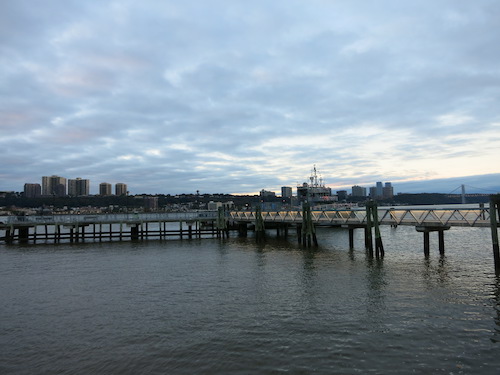
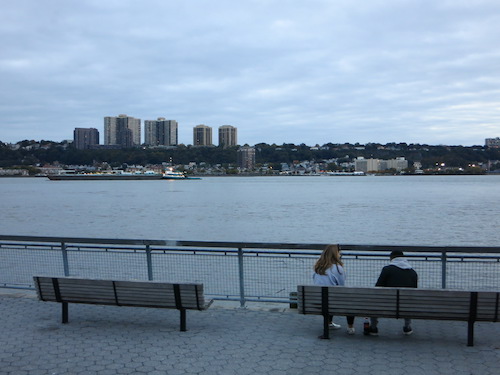
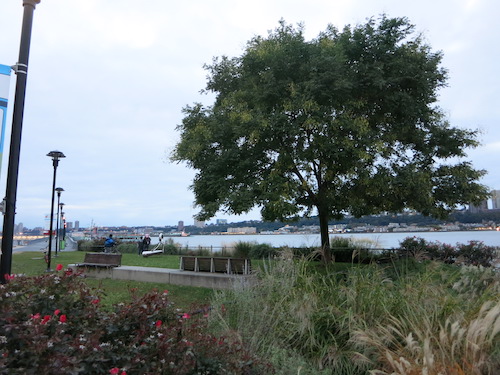
Off the northern tip of Riverside Park in West Harlem, not far from Grant's Tomb and just across the Henry Hudson Parkway from the Fairway Market, is a unique stretch of Hudson River waterfront little visited by outsiders. West Harlem Piers Park, also (or once) known as West Harlem Waterfront Park, consists of neatly maintained grass-lined paths and piers made into walkways that extend appealingly over the river.

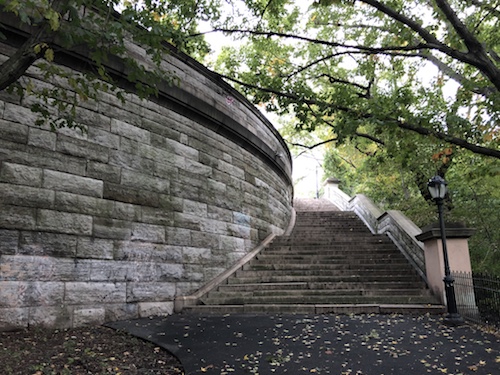
I approached from a dramatic stairway leading down from the elevated part of Riverside Park.

riverside park west harlem piers park manhattanville manhattan nyc

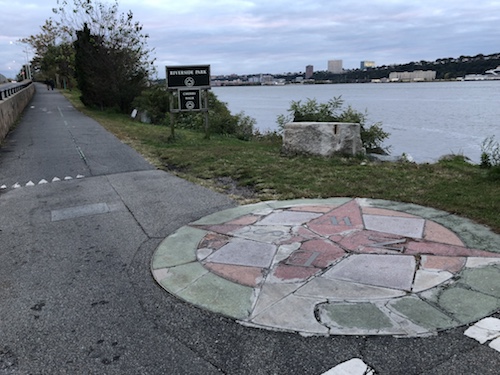
Crossing to the waterfront I found a stone compass rose at the northern tip of Riverside Park, at a terminus of the path known as Cherry Walk.

riverside park cherry walk west harlem piers park manhattanville manhattan nyc

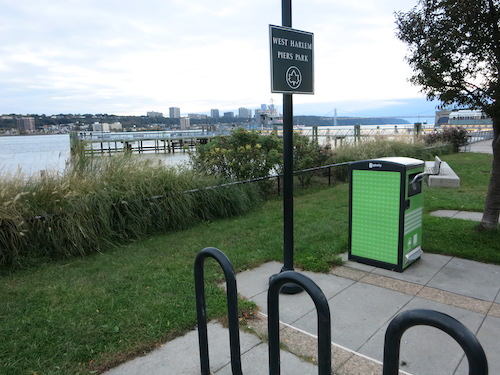
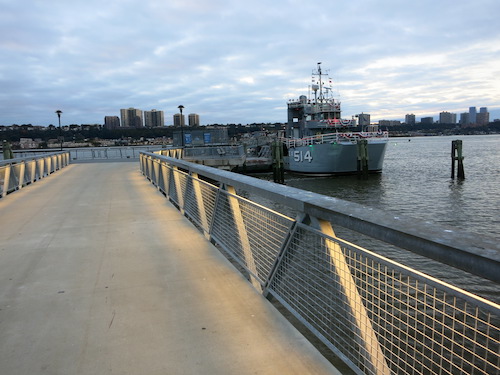
Turning north, I entered West Harlem Piers Park and naturally made a beeline for the nearest pier.

west harlem piers park manhattanville manhattan nyc

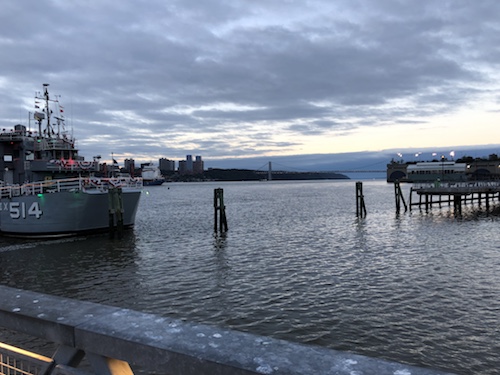
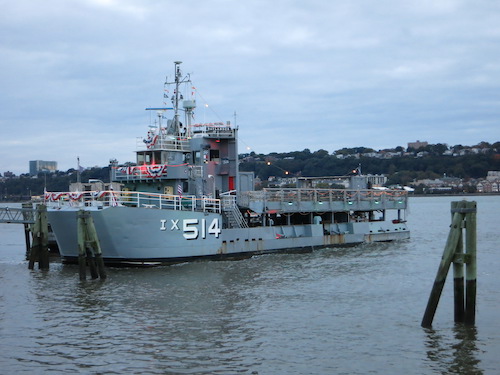
Docked semi-permanently at the southern pier is the Baylander IX-514, a decommissioned U.S. Navy freight and equipment lander and helicopter-pilot training vessel from the Vietnam era.

west harlem piers park manhattanville manhattan nyc

Now owned by the Trenk Family Foundation, the boat retains many of its military accoutrements and is used for events and education. Al Trenk's Air Pegasus runs the heliport at West 30 St., five miles downriver. The Baylander is a lot quieter.

baylander IX 514 west harlem piers park manhattanville manhattan nyc

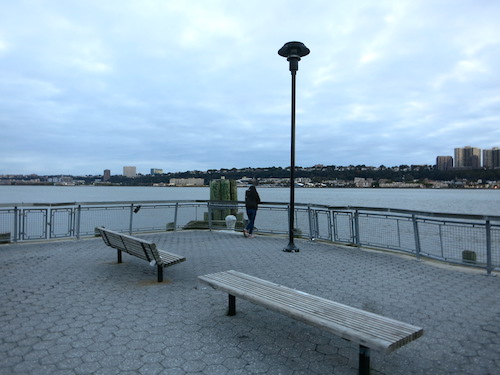
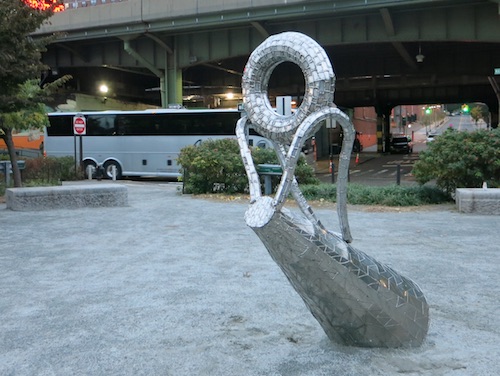
The far end of the angled pier is a great spot for gazing out across the Hudson River. But you can gaze equally well from the strip of parkland on solid ground, where shiny sculptures by Nari Ward representing casting loops (it's a fishing thing) lead you one to the next.

west harlem piers park manhattanville manhattan nyc

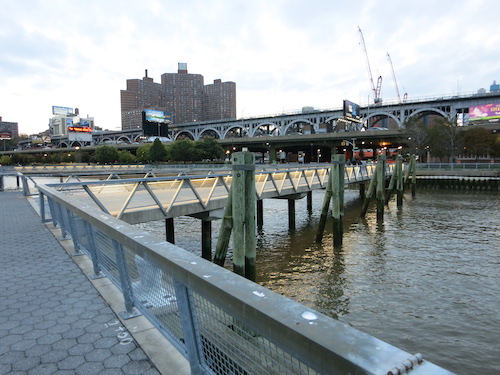
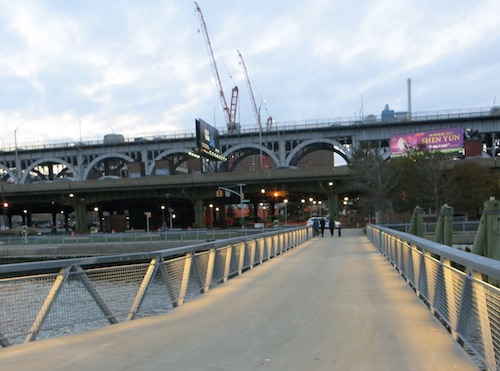
Those angles, with the arched waterfront railroad tracks in the background, make an intriguing picture, especially as the piers light up with the approach of evening.

west harlem piers park manhattanville manhattan nyc

The northern pier provides an unobstructed view of the other side of the Baylander.

baylander IX 514 west harlem piers park manhattanville manhattan nyc

This neighborhood now called Manhattanville used to be a village by that name, then an important waterfront and railroad town, before becoming industrialized. Most recently it's home to an expansion of Columbia University's campus. (It was never the home to Manhattanville College, founded downtown and now located north of the city in the Hudson Valley.)

Everyone knows about Harlem, and New Yorkers are aware of the commercial and cultural importance of 125th St. But if you're not from this part of town, you probably never heard of West Harlem Piers Park. And even if you are, it's a somewhat tricky park to get to. There's construction in the area and there are busy streets to cross.

On the other hand, it's close to the 125th St. station on the 1 train. The westernmost stretch of 125th St. angles upward, bumping into 130th St. as both hit the water's edge. (Similarly, down in Greenwich Village by Jackson Square Park you'll find the northern – yes, northern – terminus of West 4th St. banging into 13th St. Such are the crooked ways of our fair city.)

Street confusion aside, West Harlem Piers Park is well worth a visit. Especially near sunset.

All photos © Jon Sobel, Critical Lens Media

Saturday, November 17, 2018

Willowbrook Park

The Staten Island Greenbelt is an irregularly shaped band of parkland around the center of the island. I played hooky on an October Wednesday and took a walk in Willowbrook Park, one of the Greenbelt's northern reaches, with a group organized by the Parks Department and the Greenbelt Conservancy. We met at the Carousel for All Children, so named because it's accessible to kids with disabilities. Carousel season was over, but goose season was in full swing at Willowbrook Lake.

willowbrook park carousel staten island greenbelt nyc

There were Canada geese aplenty. Nothing unusual about that.

willowbrook park geese staten island greenbelt nyc

Those in the next photo, though – I think they are snow geese. As of this writing, the city is ogling a mandarin duck in Central Park. But if all those bird enthusiasts were to venture to the outer boroughs, they could feast their eyes on all kinds of birds you don't see every day.

willowbrook park geese staten island greenbelt nyc

The lake is manmade, but the ducks don't care. Nor do the fish – or the people who come to catch them.

willowbrook park willowbrook lake staten island greenbelt nyc

Fall colors were just beginning to appear over the lake.

willowbrook park willowbrook lake staten island greenbelt nyc

I'm told that the park headquarters building is the only such log structure remaining in the parks system. Apparently when others were replaced with more modern, safer buildings, this one was sort of accidentally omitted. I certainly haven't seen anything else like it in the city parks.

willowbrook park staten island greenbelt nyc

There's also a nice compass rose at the base of the flagpole in front of the carousel.

willowbrook park staten island greenbelt nyc

Behind it there's a grassy picnic area.

willowbrook park staten island greenbelt nyc

Lots of parks have bodies of water, picnic tables, carousels. How many have archery fields?

willowbrook park archery staten island greenbelt nyc

Our group of a dozen or so park enthusiasts set off on our mini-hike through the woods.

willowbrook park staten island greenbelt nyc

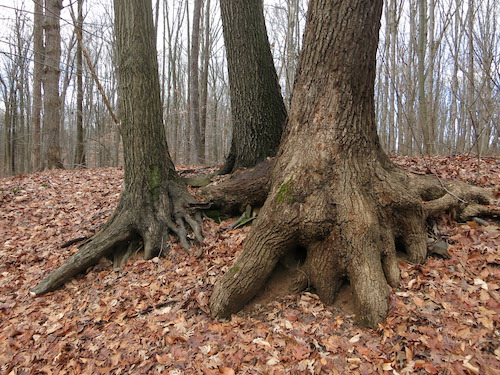
Willowbrook Park has a few tremendously tall old-growth tulip trees, among New York City's most treasured living things.

willowbrook park tulip tree staten island greenbelt nyc

Another distinctive tree is the shagbark hickory. I took home some hickory nuts that had fallen to the ground, which are theoretically edible, but the insides turned out to be too hard and dry.

willowbrook park shagbark hickory staten island greenbelt nyc

And then there are the trees that have lain down to return to the earth whence they came.

willowbrook park staten island greenbelt nyc

Our guide pointed out the poison ivy vines growing up certain trees. No sir, poison ivy ain't just "leaves of three" underfoot.

willowbrook park poison ivy staten island greenbelt nyc

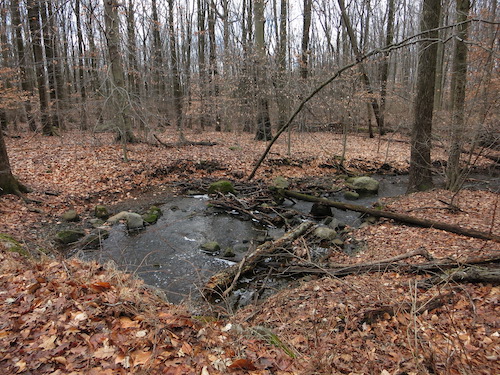
We followed the trail, marked with painted blazes. Recent rain had left muddy patches traversable by wooden boardwalks.

willowbrook park staten island greenbelt nyc

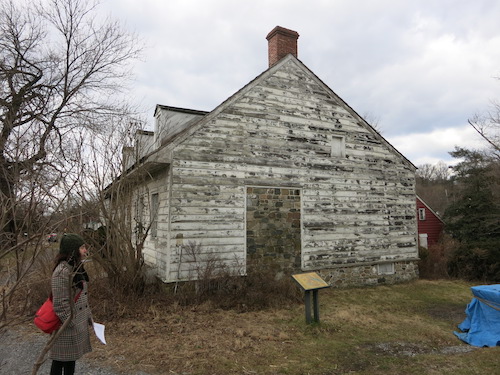
We hiked in for half an hour or so, as far as this picturesque remnant of the home of the Corson family. Nothing remains but their great, tall chimney.

willowbrook park staten island greenbelt nyc

Does the name "Willowbrook" sound familiar? The neighborhood that gave its name to this 164-acre park also gave its name to the infamous Willowbrook State School, and it became a household name when that institution's deplorable conditions were exposed by Geraldo Rivera and others. This "snake pit" (in Robert F. Kennedy's words), "built [per an article in SILive] for developmentally disabled children and adults in the 1930s...became an institution where the borough's most vulnerable residents were abused, starved and neglected – the opposite of its intent."

Reformed to a degree in the '70s, the institution closed in 1987, its land and its "gutted and renovated neo-Georgian-style buildings" [per the New York Times] becoming part of the College of Staten Island. And visitors to peaceful Willowbrook Park needn't give it a thought. See the Greenbelt website for information about upcoming hikes and other events. Just look out for the poison ivy.

All photos © Jon Sobel, Critical Lens Media