Search This Blog

Wednesday, August 20, 2025

Luther Gulick Park

On my recent walk from the F train to check out the new elevated section of East River Park by the Williamsburg Bridge, I passed a small neighborhood park I'd been unaware of. And I admit that the first thing that caught my eye about Luther Gulick Park were the bathrooms, set in a friendly, modern structure.

Luther Gulick Park, August 2025, Manhattan, NYC

This 1.6-acre Lower East Side park has a playground and courts for basketball and handball.

Luther Gulick Park, August 2025, Manhattan, NYC

But it's also a pretty nice place for a break from the urban landscape. The park has well-maintained tree stands and a looping path. In fact, it received a design award from the American Society of Landscape Architects in 2021. And just this year, Luther Gulick Park was cited as an example of best practices for designing family-friendly spaces in a report from the New York City Public Design Commission.

Luther Gulick Park, August 2025, Manhattan, NYC

I assume the ping-pong tables, and maybe the nice bathroom facilities too, were part of the park's $10 million renovation in 2009–10. That work, according to the press release, "transformed the mostly asphalt site into a lush green park that addresses the needs of the community." The renovation was part of Mayor DeBlasio's Community Parks Initiative.

Luther Gulick Park, August 2025, Manhattan, NYC

But who was Luther Gulick? Funny you should ask, because this may be the only New York City park honoring two different people with the same name.

The elder Gulick, Luther Halsey Gulick, Jr. (1865-1918), was a medical doctor and an important figure in the invention of basketball. Also, his "belief in a trilogy of mind, body, and spirit inspired the YMCA’s inverted triangle design," explains the Parks Department. Gulick founded NYC's Public School Athletic League and, with his wife, founded the Camp Fire Girls in 1910, just a year after the foundation of the Boy Scouts. In the early 20th century he served as the head of physical training in NYC's public schools and as president of the American Physical Education Association.

His nephew, Dr. Luther Halsey Gulick (1892-1993), was also a national figure. In 1921 the New York City-based Bureau of City Betterment and its associated Training School of Public Service evolved into the National Institute of Public Administration, later the Institute of Public Administration (IPA). The organization focused on improving cities' administration, and was affiliated over the years with several universities, notably Columbia. A political scientist, the younger Luther Gulick headed the IPA for most of the period between 1921 and 1961.

Alongside its sports and playing areas, Luther Gulick Park has grass, trees, and – in my view, equally important for a New York City park – rocks. Rocks link a park, even if sometimes only symbolically, to the underlying body of the planet. Which city life detaches us from, to our detriment.

Luther Gulick Park, August 2025, Manhattan, NYC

Vegetation around the edges gives the park a somewhat secluded feel.

Luther Gulick Park, August 2025, Manhattan, NYC

Gravel is something people don't usually think about, but it's important to a lot of parks. Gravel takes you off the hard pavement that dominates our city lives. It's not grass, it's not alive, and it's not exactly soft. But it's not pavement either. Dirt-like, it feels like something natural. And it doesn't require the maintenance that grass does.

Luther Gulick Park, August 2025, Manhattan, NYC

Before it was a park, the plot was part of the R. Hoe & Company headquarters. This manufacturer of printing presses and saws had a magnificent factory building.

R. Hoe & Company Headquarters in Manhattan at Grand Street and Sheriff Street,1930

The New York Public Library Digital Collections

They don't make them like that anymore.

But next time you're on the Lower East Side, whether visiting the newly elevated East River Park, shopping at Essex Market, or climbing the walls at the nearby climbing gym, spare a few minutes for under-appreciated Luther Gulick Park.

Luther Gulick Park, August 2025, Manhattan, NYC
park odyssey 325

All photos © Oren Hope except where noted

Monday, August 18, 2025

John V. Lindsay East River Park: New Elevated Section
After much effort both physical and political, a new raised section of John V. Lindsay East River Park opened this past Memorial Day. When completed, the new park, as part of the East Side Coastal Resiliency Project, should withstand the rising levels and tides of climate change.
Residents and some parks advocates complained as the project was proposed and planned. So many mature tress would be sacrificed. Neighborhood playing fields would vanish for years.

When the new section opened, visitors complained too – this is New York, after all. There's no shade! So much concrete! Plus now, the section north of this one is shut down. All the way up to Stuyvesant Cove.

Well, yes. These huge projects do have to be completed step by step.

Meanwhile, of course there's no shade at this new section by the Williamsburg Bridge: The freshly planted trees are still mere young'uns.

East River Park elevated section, August 2025, Manhattan, NYC

With all its amenities, this piece of riverfront parkland isn't yet connected to adjacent acreage, so as it's fairly far from the subway it's not so easy to get to if you don't live close by.

But lots of people do live close by.

East River Park elevated section, August 2025, Manhattan, NYC

The present access is via a footbridge at the the south side of Delancey Street, hard by the soaring arches of the Williamsburg Bridge itself.

East River Park elevated section, August 2025, Manhattan, NYC

(Biking would be a good option, but not if the biking itself is your reason for going – the bike path within is necessarily a mere stump.)

East River Park elevated section, August 2025, Manhattan, NYC

Once inside, you come upon square stone blocks picturesquely fringing snazzy new basketball courts.

East River Park elevated section, August 2025, Manhattan, NYC

The bridge looms overhead.

East River Park elevated section, August 2025, Manhattan, NYC

Past new plantings and wide grassy fields the Brooklyn skyline rises. That's right – the Brooklyn skyline. Whodathunk? (That tallest building is called Brooklyn Tower. Get used to it. The years when Brooklyn builders weren't allowed to build higher than the Williamsburgh Savings Bank Tower are long past.)

East River Park elevated section, August 2025, Manhattan, NYC

The intervening brick structure in the photo above is the East River Park Fireboat House. The Village Sun reported last year as construction of the park was underway that this "two-story Moderne-style building was erected in 1941 in East River Park for the Fire Department’s Marine Company 66, replacing similar structures that had operated from a pier at the end of Grand Street since 1898." Most recently the building served as the headquarters of our friends at the Lower East Side Ecology Center.

East River Park elevated section, August 2025, Manhattan, NYC

The barbecue area wasn't in use at 10 in the morning on a Sunday. But it's ready.

East River Park elevated section, August 2025, Manhattan, NYC

A handful of people were about. Strolling. Fishing.

East River Park elevated section, August 2025, Manhattan, NYC

The black dog you see in the distance in the next photo ran up to me eagerly, tennis ball in mouth. Dogs, right?

East River Park elevated section, August 2025, Manhattan, NYC

The day was already hot, making this fountain tempting.

East River Park elevated section, August 2025, Manhattan, NYC

The soccer field, baseball field, and tennis courts are already popular. Another complaint: there are only half as many tennis courts as there were before climate change got so urgent. People were already queuing for a court at the Brian Watkins Tennis Center. (It's named for "a Utah tourist and University of Idaho tennis player who was slain in the subway while attending the 1990 U.S. Open," Courts morbidly explains. The Courts article also has some good photos of this part of the park in former days.)

East River Park elevated section, August 2025, Manhattan, NYC

It was a slow Sunday morning. But the amount of trash this worker had collected suggested much heavier recent use of the grounds.

East River Park elevated section, August 2025, Manhattan, NYC

Some doubted whether this park would actually get off the ground – or off sea level, to be precise. Well, it did. And there's clearly much more to come. A small but maybe not insignificant bit of evidence that this chaotic, almost ungovernable city can actually get important things done. Sometimes.

East River Park elevated section, August 2025, Manhattan, NYC
park odyssey 300

All photos © Oren Hope

Thursday, October 31, 2024

Queens County Farm Museum

Flush up against Nassau County, on the eastern edge of Queens ("Deep Queens"?), is a place that feels less a part of New York City and more like Long Island. As a working farm, this place, now known as the Queens County Farm Museum, dates all the way back to 1697.

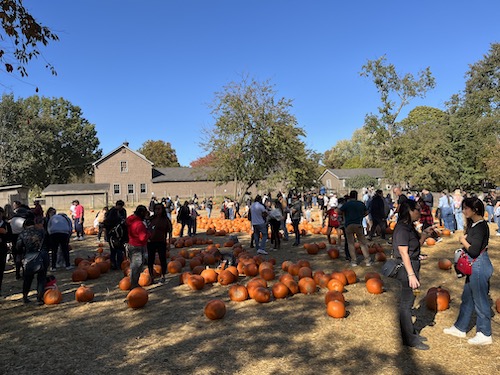
With farm animals, hayrides, a corn maze right now, and free admission, this outdoor museum gets packed with families with children on a sunny weekend. On a warm sunny fall day there was even a a field strewn with pumpkins, generously called a "pumpkin patch."

Pumpkin patch at Queens County Farm Museum, Queens, NYC

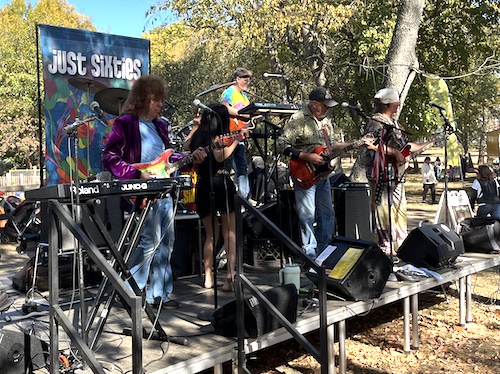
There's even live music – on this day, a band that plays only songs from the '60s. They were good. They also added to the impression that we weren't in New York City any more, but in the strong orbit of suburban Long Island.

Just Sixties at Queens County Farm Museum, Queens, NYC

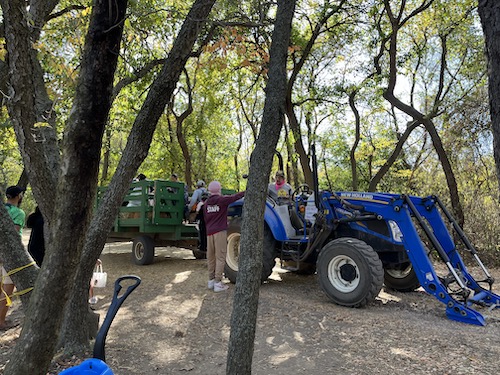
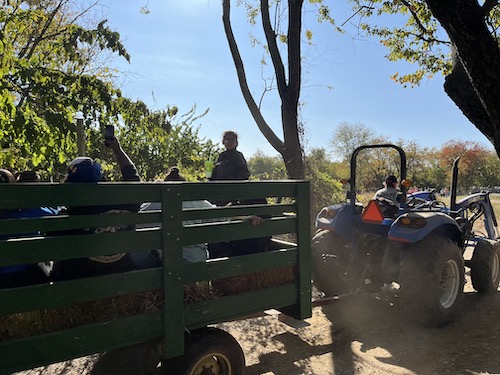
And where else can you find a hayride within the five boroughs?

Hayride at Queens County Farm Museum, Queens, NYC

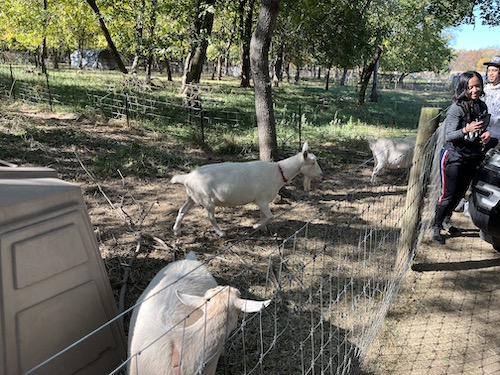
The goats are a big hit with children – and grown-ups.

Goats at Queens County Farm Museum, Queens, NYC

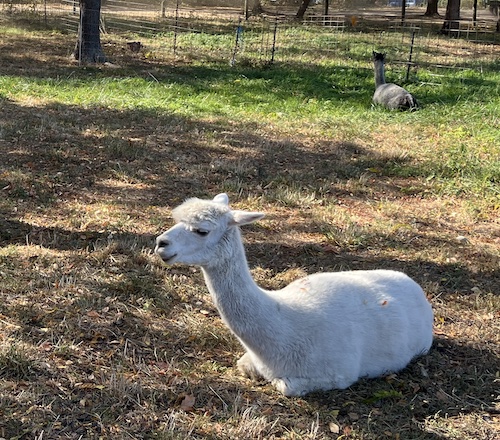
And who doesn't love alpacas?

Goats at Queens County Farm Museum, Queens, NYC

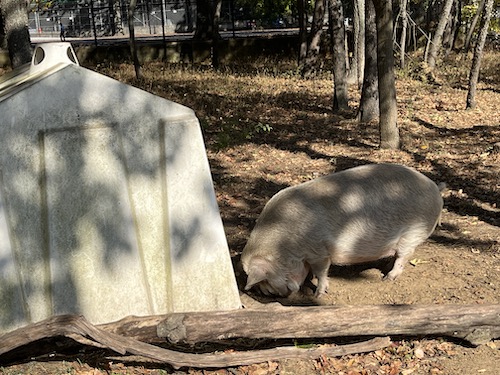
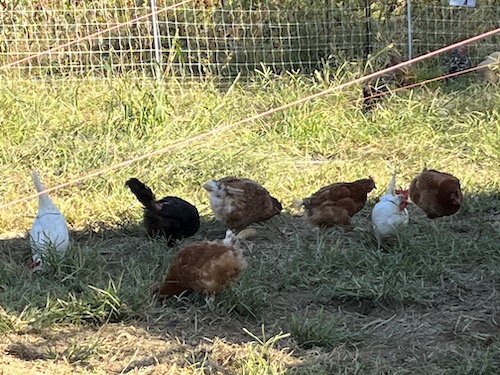
It wouldn't be a canonical farm without pigs and chickens.

Pig at Queens County Farm Museum, Queens, NYC
Chickens at Queens County Farm Museum, Queens, NYC

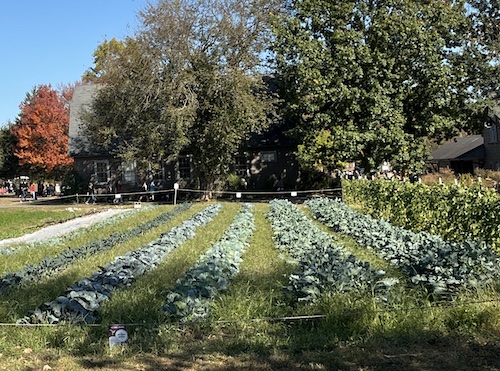
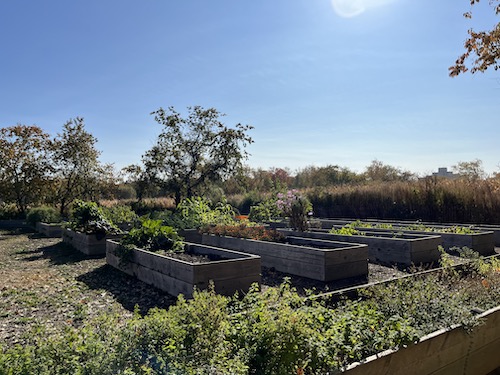
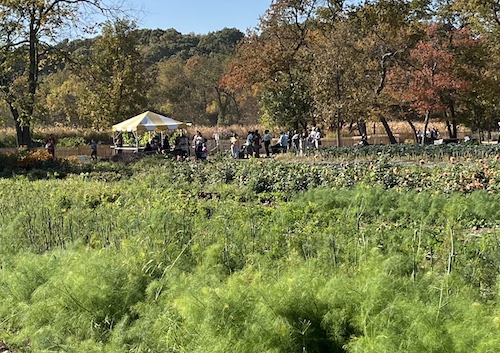
The farm grows crops too, enough not just for educational purposes but to sell.

Crops at Queens County Farm Museum, Queens, NYC

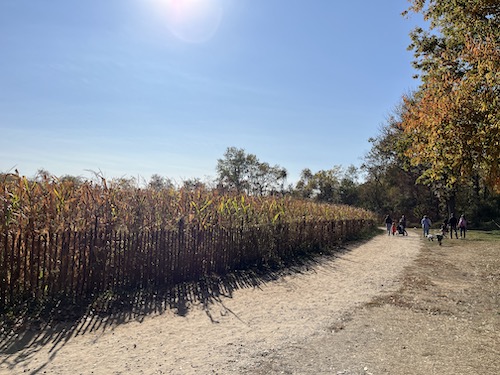
As for the maize maze, we took the easy way: around instead of through.

Corn maze at Queens County Farm Museum, Queens, NYC

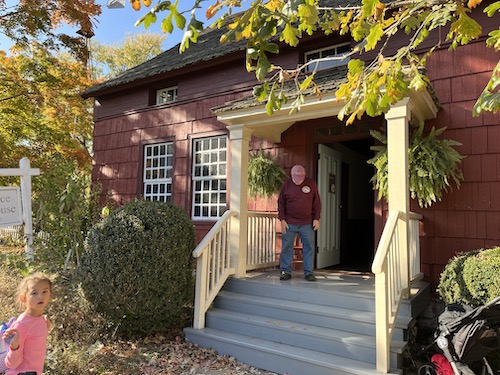
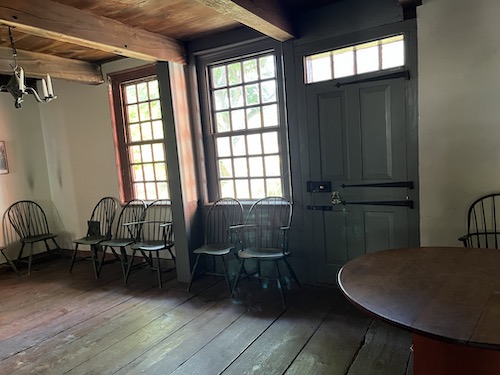
The museum also invites history buffs into the Adriance Farmhouse. The home's original three-room form dates back to 1772. It's been added to in the intervening centuries, and the conservators have done a nice job setting up rooms to reflect different centuries of habitation.

The Adriance Farmhouse at Queens County Farm Museum, Queens, NYC

The farmhouse has been restored nicely, with original elements like floors and some windowpanes. The museum offers tours of the house, also free.

The Adriance Farmhouse at Queens County Farm Museum, Queens, NYC

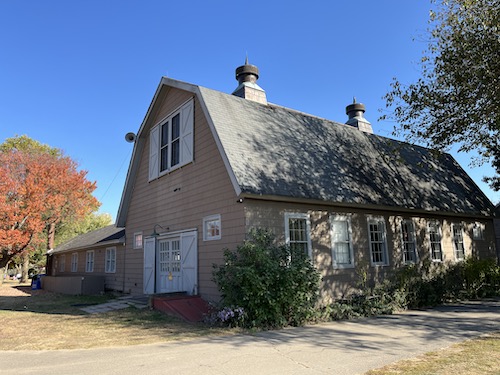
What self-respecting farm wouldn't have a barn?

The Adriance Farmhouse at Queens County Farm Museum, Queens, NYC

The farm is a good spot to take urban kids to learn about where food actually comes from, and to see animals and have some outdoor fun. Its sheer size is also a great feature for explorers looking for spaces to walk around at length without worrying about getting run over by a vehicle. Just gotta look out for those hayrides...

Hayride at Queens County Farm Museum, Queens, NYC

The Queens County Farm Museum is open seven days a week from 10 to 5, year-round except major holidays. There's a seasonal farmstand that sells fruits, vegetables, flowers, and herbs grown right on the farm. Also eggs. And free parking.

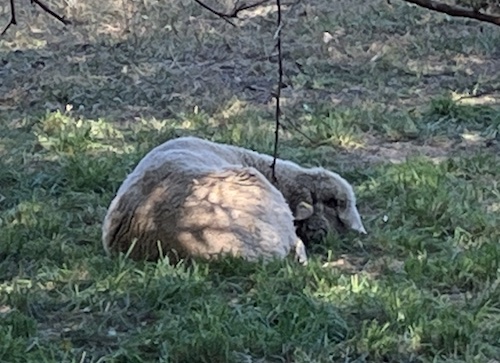
So don't be sheepish. Hop on a city bus, or into your car if you've got one. The Farm awaits.

Sheep at Queens County Farm Museum, Queens, NYC
Queens County Farm Museum, Queens, NYC
park odyssey 300

All photos © Oren Hope