Search This Blog

Showing posts with label Williamsburg Bridge. Show all posts

Monday, August 18, 2025

John V. Lindsay East River Park: New Elevated Section

After much effort both physical and political, a new raised section of John V. Lindsay East River Park opened this past Memorial Day. When completed, the new park, as part of the East Side Coastal Resiliency Project, should withstand the rising levels and tides of climate change.

Residents and some parks advocates complained as the project was proposed and planned. So many mature tress would be sacrificed. Neighborhood playing fields would vanish for years.

When the new section opened, visitors complained too – this is New York, after all. There's no shade! So much concrete! Plus now, the section north of this one is shut down. All the way up to Stuyvesant Cove.

Well, yes. These huge projects do have to be completed step by step.

Meanwhile, of course there's no shade at this new section by the Williamsburg Bridge: The freshly planted trees are still mere young'uns.

East River Park elevated section, August 2025, Manhattan, NYC

With all its amenities, this piece of riverfront parkland isn't yet connected to adjacent acreage, so as it's fairly far from the subway it's not so easy to get to if you don't live close by.

But lots of people do live close by.

East River Park elevated section, August 2025, Manhattan, NYC

The present access is via a footbridge at the the south side of Delancey Street, hard by the soaring arches of the Williamsburg Bridge itself.

East River Park elevated section, August 2025, Manhattan, NYC

(Biking would be a good option, but not if the biking itself is your reason for going – the bike path within is necessarily a mere stump.)

East River Park elevated section, August 2025, Manhattan, NYC

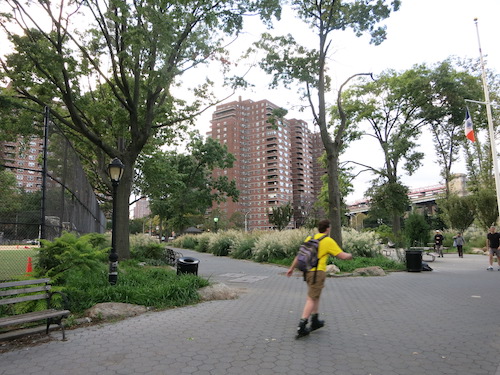
Once inside, you come upon square stone blocks picturesquely fringing snazzy new basketball courts.

East River Park elevated section, August 2025, Manhattan, NYC

The bridge looms overhead.

East River Park elevated section, August 2025, Manhattan, NYC

Past new plantings and wide grassy fields the Brooklyn skyline rises. That's right – the Brooklyn skyline. Whodathunk? (That tallest building is called Brooklyn Tower. Get used to it. The years when Brooklyn builders weren't allowed to build higher than the Williamsburgh Savings Bank Tower are long past.)

East River Park elevated section, August 2025, Manhattan, NYC

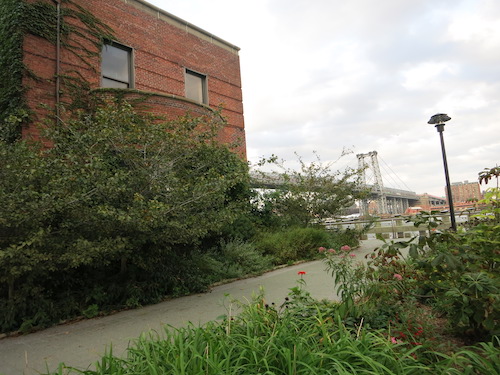
The intervening brick structure in the photo above is the East River Park Fireboat House. The Village Sun reported last year as construction of the park was underway that this "two-story Moderne-style building was erected in 1941 in East River Park for the Fire Department’s Marine Company 66, replacing similar structures that had operated from a pier at the end of Grand Street since 1898." Most recently the building served as the headquarters of our friends at the Lower East Side Ecology Center.

East River Park elevated section, August 2025, Manhattan, NYC

The barbecue area wasn't in use at 10 in the morning on a Sunday. But it's ready.

East River Park elevated section, August 2025, Manhattan, NYC

A handful of people were about. Strolling. Fishing.

East River Park elevated section, August 2025, Manhattan, NYC

The black dog you see in the distance in the next photo ran up to me eagerly, tennis ball in mouth. Dogs, right?

East River Park elevated section, August 2025, Manhattan, NYC

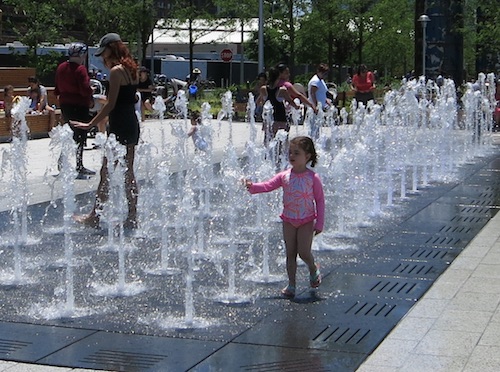
The day was already hot, making this fountain tempting.

East River Park elevated section, August 2025, Manhattan, NYC

The soccer field, baseball field, and tennis courts are already popular. Another complaint: there are only half as many tennis courts as there were before climate change got so urgent. People were already queuing for a court at the Brian Watkins Tennis Center. (It's named for "a Utah tourist and University of Idaho tennis player who was slain in the subway while attending the 1990 U.S. Open," Courts morbidly explains. The Courts article also has some good photos of this part of the park in former days.)

East River Park elevated section, August 2025, Manhattan, NYC

It was a slow Sunday morning. But the amount of trash this worker had collected suggested much heavier recent use of the grounds.

East River Park elevated section, August 2025, Manhattan, NYC

Some doubted whether this park would actually get off the ground – or off sea level, to be precise. Well, it did. And there's clearly much more to come. A small but maybe not insignificant bit of evidence that this chaotic, almost ungovernable city can actually get important things done. Sometimes.

East River Park elevated section, August 2025, Manhattan, NYC
park odyssey 300

All photos © Oren Hope

Tuesday, October 23, 2018

Corlears Hook Park

I first glimpsed Corlears Hook Park from the water. Specifically, from the NYC Ferry, whose new Lower East Side route stops at a new dock at Corlears Hook, just up the East River from the busy Wall Street terminal. What's that green space? I wondered.

Once again, I'd been mistaken about having visited every park in Manhattan.

Corlears Hook Park gets its name from the old Dutch van Corlear family (alternately spelled Corlaer or Curler). Prominent among them was New Amsterdam schoolmaster Jacob Van Corlaer, but his is an interesting family altogether.

Jacob's relative Anthony Van Corlaer was mythologized by Washington Irving as Anthony the Trumpeter. This bulbous-nosed musician is said to have ridden up Manhattan in 1642, Paul Revere-like, warning the Dutch settlements of a seemingly imminent English attack. The legend of his death by shark (or giant fish, or more likely drowning) is reputed to be the origin of the name Spuyten Duyvil.

Arent van Curler, the founder of Schenectady, was another relation.

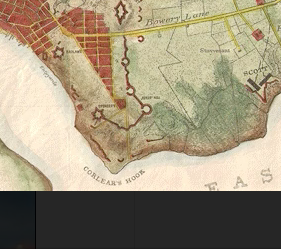
corlears hook park manhattan nycThe "Hook" in "Corlears Hook" refers to a sharp bend in the shoreline you can see clearly in this image of the coast before landfill bloated it into its current more rounded shape.
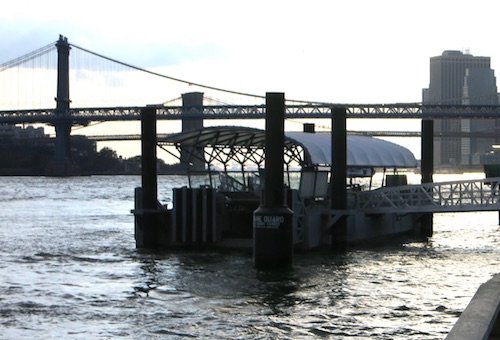
When George Washington led the Continental Army from Brooklyn to Manhattan under cover of night in 1776, their boats put in where Corlears Hook Park is today. Presumably it was a known handy spot for that; the Parks Department website describes it as "[o]riginally marshland that was used by the Lenape tribe to land their canoes."

Today it's the NYC Ferry that pulls in, to a spanking new dock.

corlears hook park nyc ferry manhattan nyc

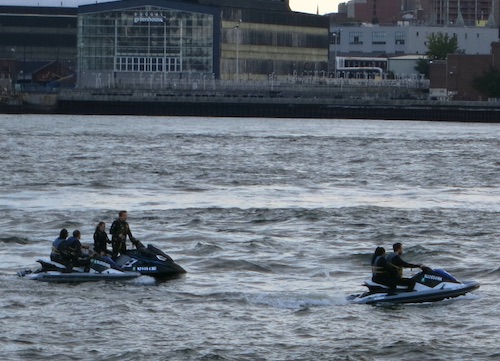
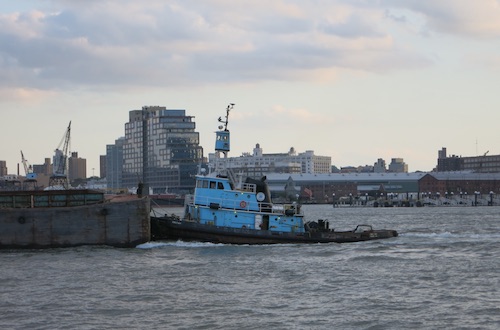
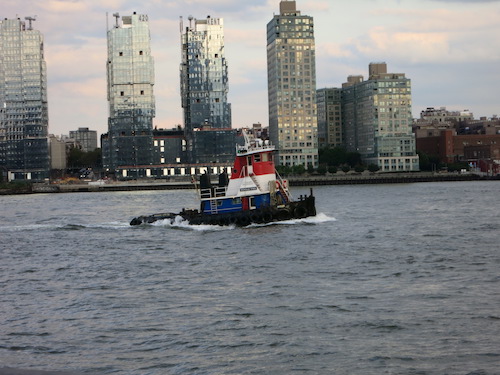
Meanwhile tugboats motor by, with or without barges, and jet-skiers zip past. (If Anthony the Trumpeter had had one of those, he might not have needed his trumpet; the noise alone would have alerted the colonists.)

corlears hook park tugboat barge manhattan nyc
corlears hook park jet ski manhattan nyc

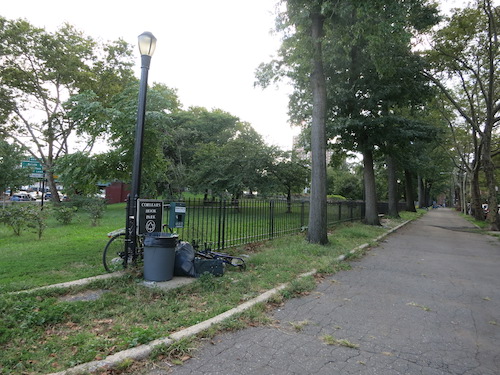
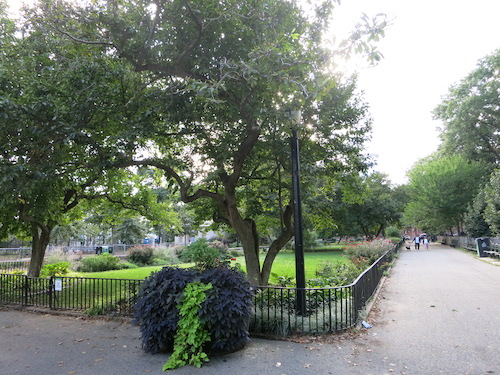
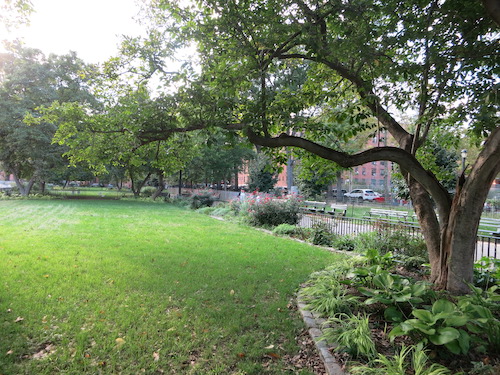
If you're not traveling by water, though, and you don't live in the neighborhood, getting to Corlears Hook Park takes some effort, as it's a bit of a walk from the East Broadway stop on the F. And when you do arrive, you may be disappointed at first. The old part of the park, west of the FDR Drive, is a bit bedraggled.

corlears hook park manhattan nyc

There's evidence of care, though, in the cut grass and pretty plantings.

corlears hook park manhattan nyc

This part of the park dates to the turn of the 20th century. The city had acquired the land in 1893 to create open space to serve the neighborhood's ever-increasing immigrant population. When finished, it was purportedly quite a handsome park. When the FDR drive was built and the shoreline further developed through the WPA in the 1930s, the park lost some of its acreage, but Robert Moses added park space on the landfill across the highway, resulting in the two-part Corlears Hook Park you'll find today.

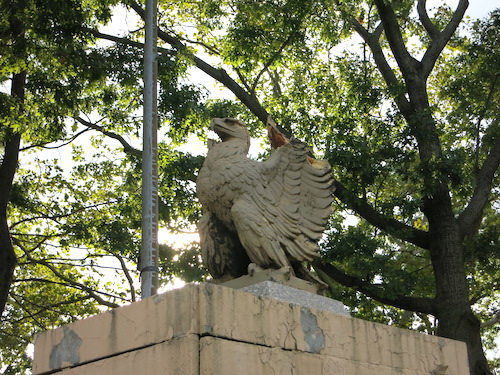
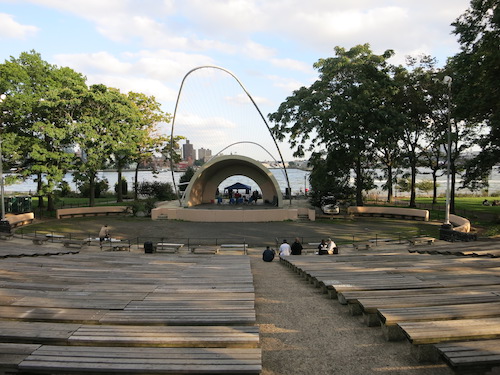
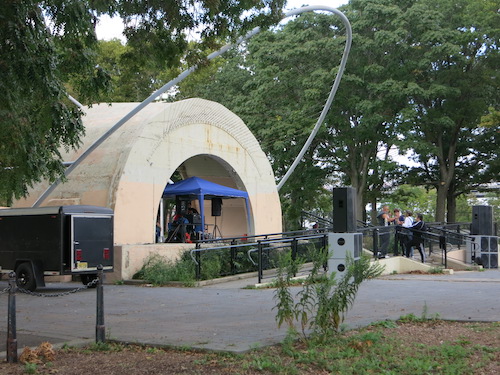
Cross a footbridge into the newer part of the park, give a nod to the stone eagles, and observe the bandshell before you.

corlears hook park manhattan nyc
corlears hook park bandshell manhattan nyc

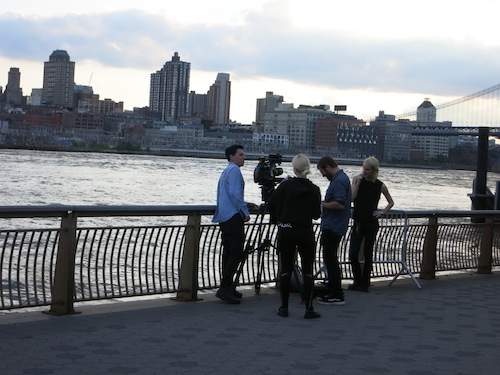
The day we visited, a small dance party was underway, an NYC Ferry zipped towards the dock, and of course, a quartet of Millennials was doing a video shoot.

corlears hook park bandshell manhattan nyc
corlears hook park nyc ferry manhattan nyc
corlears hook park manhattan nyc

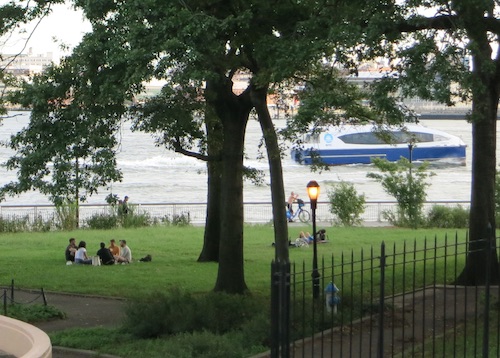
But this great "hidden" stretch of waterfront is a beautiful place to just relax too.

corlears hook park manhattan nyc

Corlears Hook Park is part of a string of parkland that runs along the riverfront. I spotted a skater rolling up out of Corlears straight into East River Park. (Maybe there's a time warp thing going on here, too; you don't see in-line skates much anymore.)

corlears hook park manhattan nyc

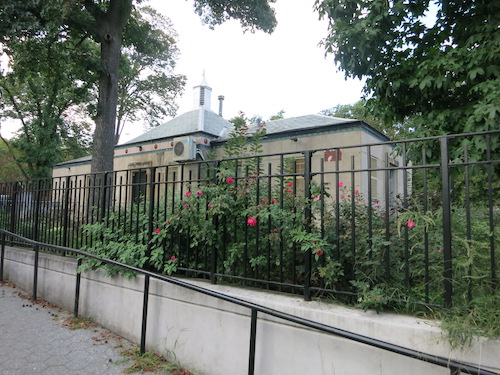
Somewhere around the transition point between the parks is the East River Park Fire Boat House, a picturesque landmark that now, courtesy of the Lower East Side Ecology Center, which works out of the building, has a "green roof," a bed of plant life atop the structure. (I take this on faith. You can't see the roof from the ground. It's a roof.)

corlears hook park east river park fire boat house manhattan nyc

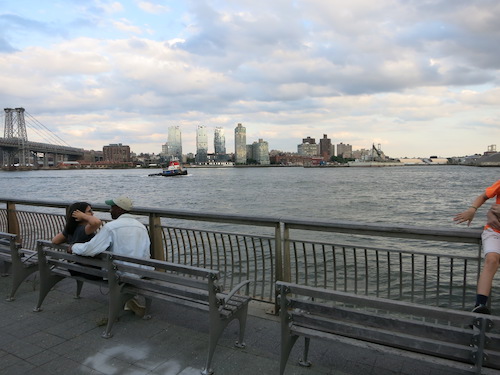
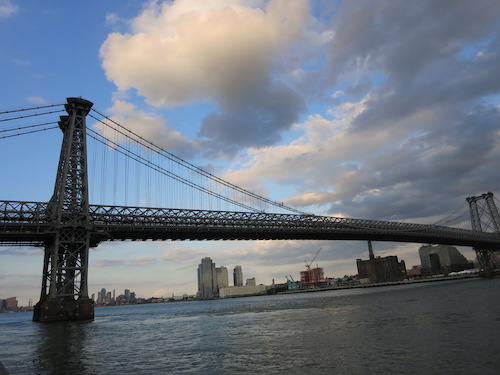
To cap off a visit to Corlears Hook, take in the view of the Williamsburg Bridge, unspoiled by intrusive glass towers like the horrible one that has wrecked the view of the Brooklyn Bridge from Brooklyn Bridge Park.

williamsburg bridge nyc

And for an actual fireboat, cross to the other side of the island, roll uptown, and visit the John J. Harvey at Hudson River Park.

All photos © Jon Sobel, Critical Lens Media

Friday, June 22, 2018

Domino Park

Like most New York City parks that have opened with fanfare in recent years, Domino Park, on the East River in Williamsburg, Brooklyn, isn't city-run, but privately funded and maintained.

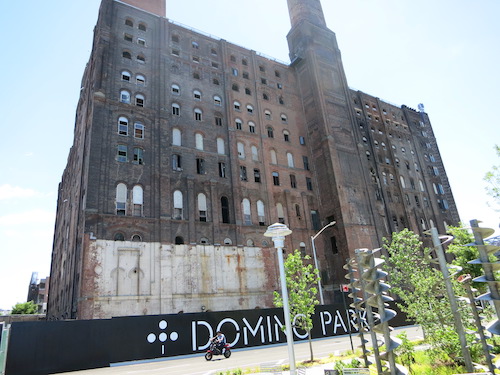
The first completed stage of a larger redevelopment of the old Domino Sugar Refinery, six-acre Domino Park is a vast improvement over the desolate stretch of waterfront that had defined this edge of the neighborhood since Domino closed the plant in 2004. And with its creative reuse of relics of the industrial past, the park is spectacular in a splashy sort of way.

domino park williamsburg brooklyn nyc

It's also weirdly theme-park-ish, an effect that's especially notable if you cross into it from dusty old Grand Ferry Park which borders its northern edge. Grand Ferry Park also has an industrial relic – a hundred-year-old smokestack from a Pfizer molasses plant. You could say Domino Park took that idea and ran with it to the extreme – inspired also, no doubt, by the High Line, New York City's most famous conversion of industrial infrastructure to park facilities and another instance of private development stepping in where city funds don't dare to tread. But the contrast between the big, shiny new park and its little, scuffed-up old neighbor is extreme.

domino park williamsburg brooklyn nyc

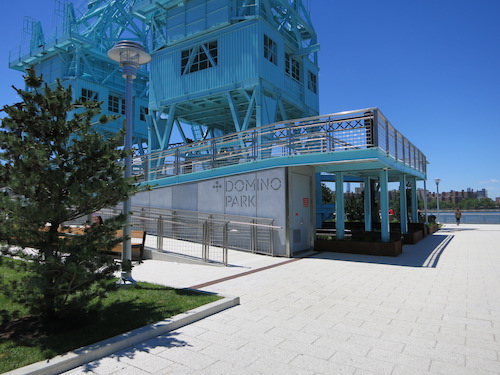
The photo above shows the northern entrance to Domino Park and to the elevated catwalk called Artifact Walk, which stretches for several blocks.

domino park williamsburg brooklyn nyc

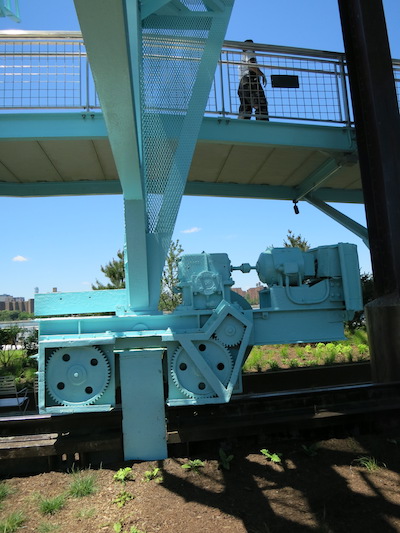
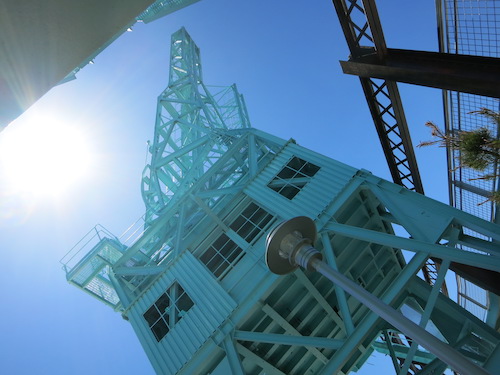
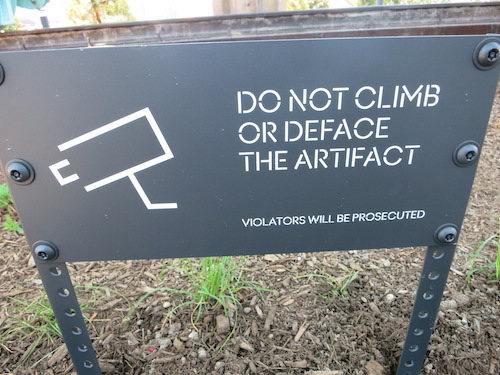
The walk incorporates two large cranes from refinery days, the whole thing painted in what Curbed describes as "the park's signature turquoise," a cheery, summery hue that softens all the hard, heavy metal into a gentle, Disneyish playpen.

domino park artifact walk crane williamsburg brooklyn nyc
domino park williamsburg brooklyn nyc

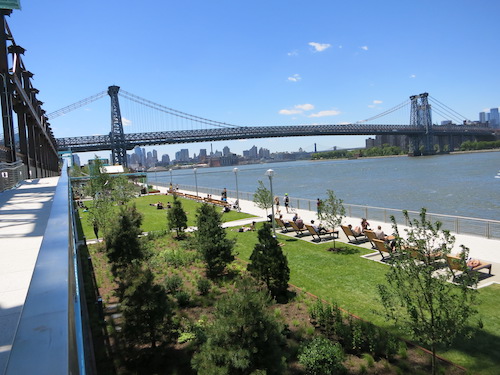
The elevated walkway offers a panoramic view of the park, the river, and the Williamsburg Bridge, which was the world's longest suspension bridge when it opened in 1903.

domino park williamsburg brooklyn nyc

The park platform itself, with its "sustainable foliage and trees, a mix of natives and exotics" according to Architectural Digest, has been built "above the 100-year flood elevation and set back 100 feet from the water's edge." Of course, we know terms like "100-year flood" have little meaning now, well into the Anthropocene.

There are a couple of signs of our times in that last paragraph. The first is the mere fact that landscape firm James Corner Field Operations, which also led the development of the High Line, considered climate change and sea level rise when it designed the new park. Second, note the interest taken by a prestigious architecture publication. This facility has been laid out as deliberately as the interior of any new building.

domino park williamsburg brooklyn nyc

But the interest taken by Real Estate Weekly is also the sharpest indicator of how crucial commercial and financial considerations are to the fate of potential parkland in the city. Its website gushed that Domino Park is "nothing short of miraculous" and "should serve as a national model of urban renewal and an example for future developments."

Kudos, then, to Two Trees Management, owner and operator of the whole Domino redevelopment, including the park. I remember when Two Trees was a small family concern just getting a toehold in Dumbo, where my band shared the rental of a rehearsal studio in the rundown old days. The Domino development will include 2,800 rental apartments. Seven hundred of those will be "affordable." Which means available to (maybe) the five percent, as opposed to just the one percent.

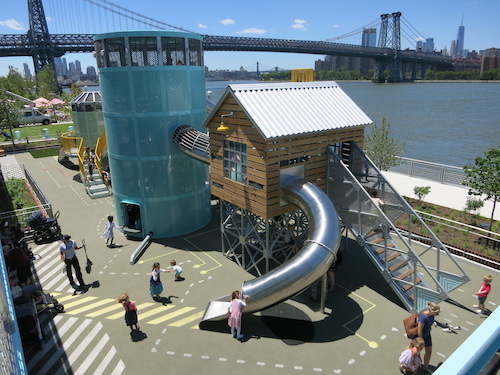
Domino Park isn't just about architecture and real estate. It's also art. Just before it opened, Daniel McDermon of The New York Times heralded "One of this weekend's most anticipated art openings." He was referring to the playground. Designed by Mark Reigelman and incorporating spinning valve wheels cast from Domino originals, it's meant to mimic the sugar refining process. "The idea is that a child enters as raw sugar cane, and exits at the last portion of the playground as molasses, or sugar cubes," Reigelman told the Times. Fun? Creepy? Maybe both. Either way, the ghost of the old Pfizer molasses plant next door would surely approve.

In any case, when I visited, kids were definitely enjoying the refining process.

domino park williamsburg brooklyn nyc

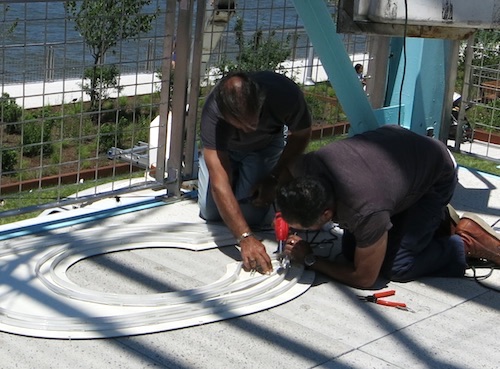
Meanwhile, up on the Artifact Walk, workers were putting the finishing touches on what looks like a giant "C." What will it help spell? "Come and Play?" "Children Are Our Future"? "Can You Afford to Live Here?"

domino park williamsburg brooklyn nyc

Grown-ups were enjoying the outdoor seating at the Danny Meyer taco shack.

domino park williamsburg brooklyn nyc

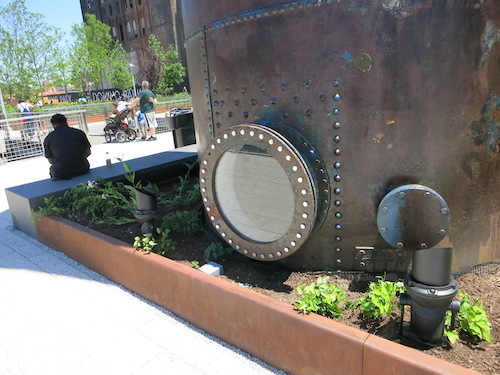
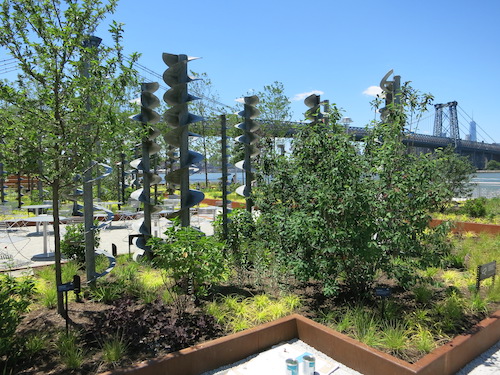
Old screw conveyors, repositioned as design elements, jutted up from the ground.

domino park williamsburg brooklyn nyc

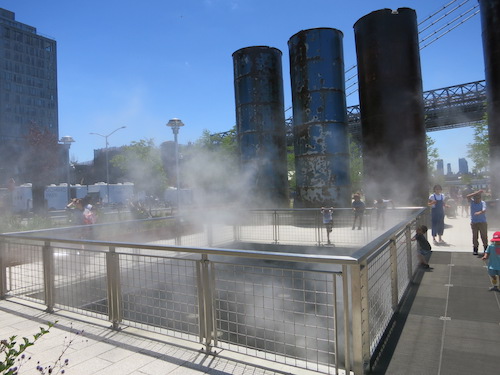
Below ancient tanks, steam rose from vents installed in a cut-away section of the pier. If this "poof of noirish fog" (as Gothamist slinkily described it) looks refreshing on a hot day, be aware that if you step into the steam, you will get wet.

domino park williamsburg brooklyn nyc

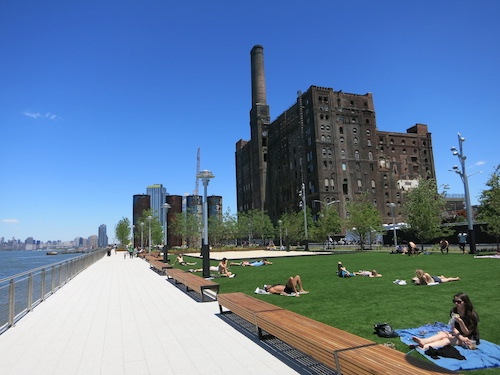
The park is manicured to within an inch of its life. Along with the kinetic fountain, playground, steam vents, and artifacts, there are bocce and volleyball courts and a couple of sharply defined stretches of grass to stretch out on.

domino park williamsburg brooklyn nyc

Meanwhile, across Kent Ave., plenty of development remains to be done.

domino park williamsburg brooklyn nyc

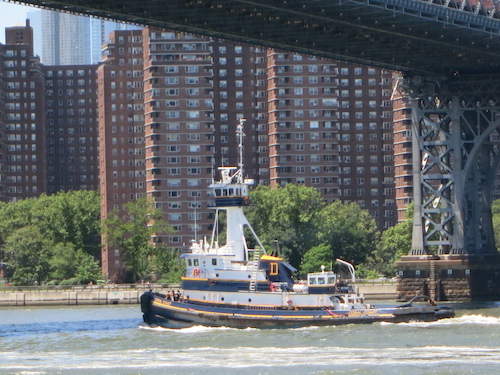
And the life of the city churns on, oblivious, on the nearby streets and on the East River. I spotted the tugboat Coral Coast motoring under the bridge.

domino park williamsburg bridge brooklyn nyc tugboat

I have mixed feelings about Domino Park, as I do about any public facility run not by the municipal or state government but by private owners. You have to wonder what would happen if – or should I say, what will happen when – the developers fall on hard times. What if the real estate market crashes? Or a huge storm surge or other natural disaster runs roughshod over the sparkling new park, knocking over all the amenities like, well, dominoes?

Of course, when hard times hit, city-run facilities deteriorate too. Just ask the people who founded the Central Park Conservancy.

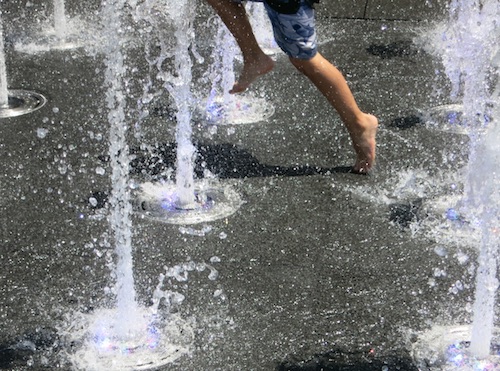
On balance, any way it comes about, a new park is a good thing. And, all philosophical and social questions aside, on the hot day of my visit this dance step seemed to say it all:

domino park williamsburg brooklyn nyc

All photos © Jon Sobel, Critical Lens Media