Search This Blog

Thursday, June 23, 2022

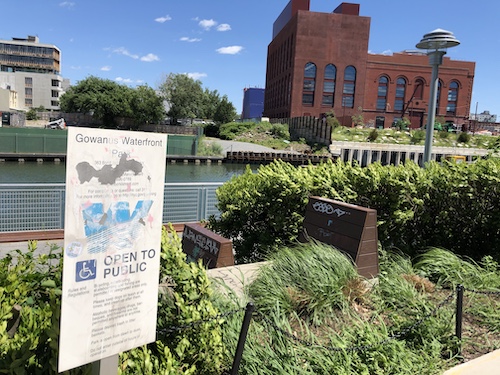
Gowanus Waterfront Park and Gowanus Canal Sponge Park

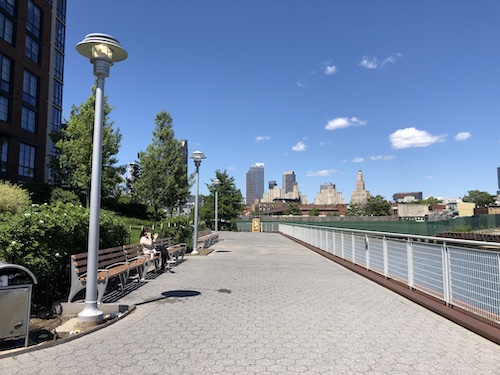
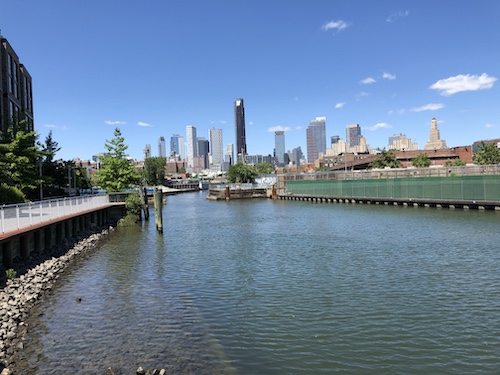
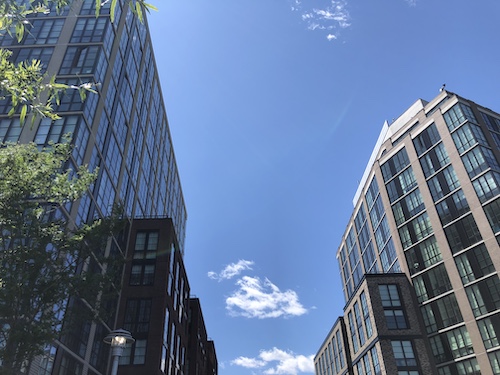
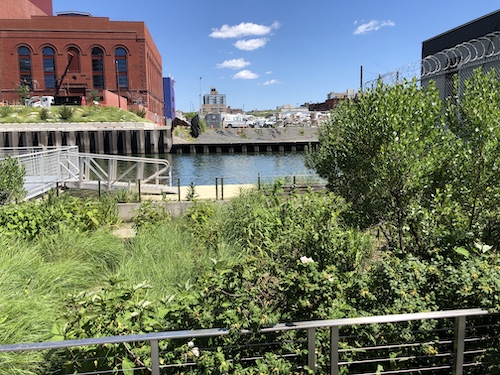
The waters of the Gowanus Canal may never be pristine. But the neighborhood around it has sure shined up. Case in point: along the canal's west bank, abutting sparkling new condo buildings, now lies Gowanus Waterfront Park.

gowanus waterfront park gowanus canal sponge park brooklyn new york city parks

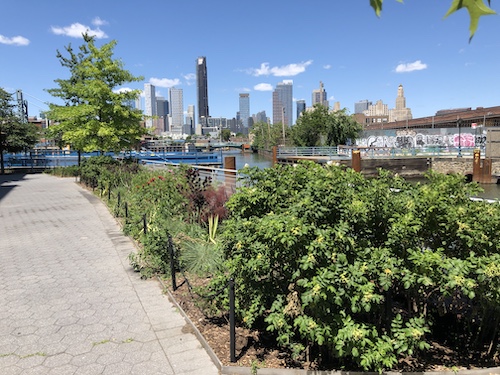
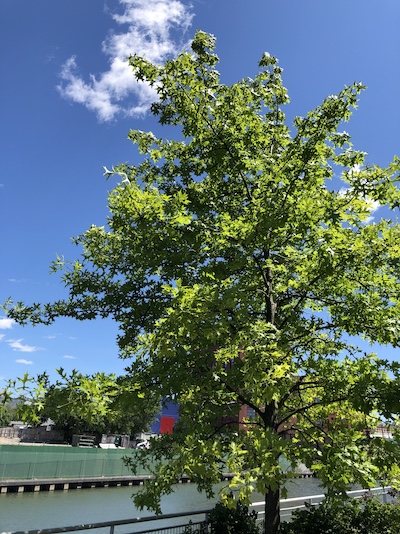
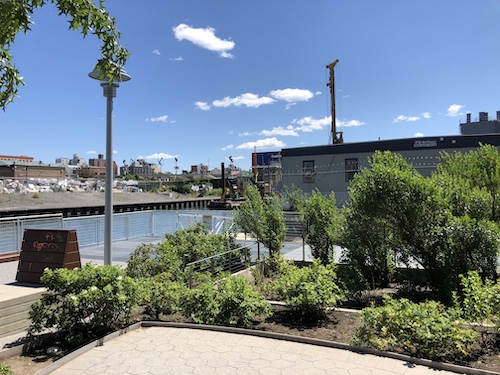
This two-block stretch of walkways, plantings and benches has already suffered some weathering in its few years of existence. But it's quiet and peaceful, with waterfront views that are actually quite nice, and even a few young oak trees blazing bright green on a sunny day in June.

gowanus waterfront park gowanus canal sponge park brooklyn new york city parks

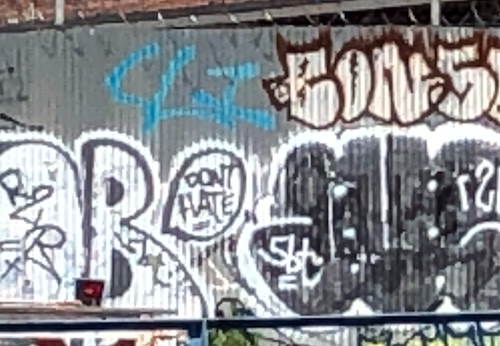
New residential development has erased most signs of the immediate area's industrial past, though graffiti in sight reminds us of the rough edge that remains. (Though also not to hate.)

gowanus waterfront park gowanus canal sponge park brooklyn new york city parks

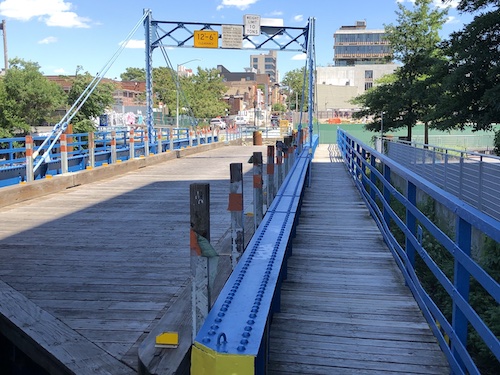
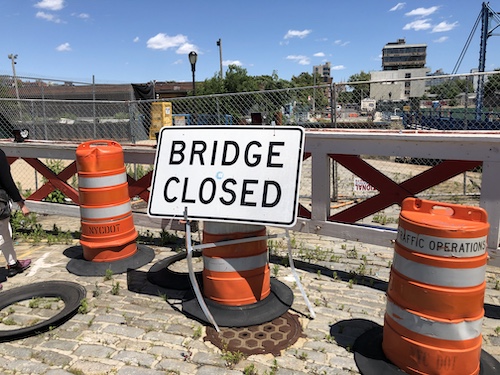
Still, the retractile (or retractible) Carroll Street Bridge at the park's northern end, though currently closed for testing and repairs, vividly reminds us of Brooklyn's history. The bridge opened in 1889. An official city landmark, it is, according to Untapped Cities, the oldest of the three remaining retractable bridges in the United States. Seeing it in operation is a real thrill for an infrastructure-history buff. I really hope it returns to working order eventually.

gowanus waterfront park gowanus canal sponge park brooklyn new york city parks carroll street bridge

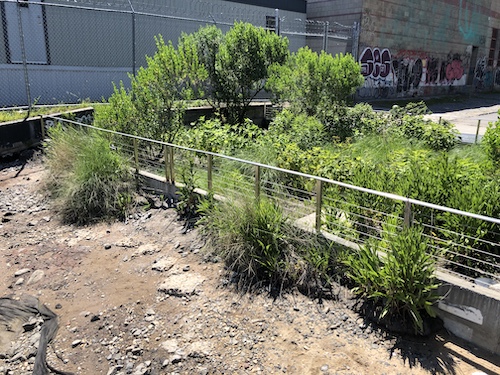
And speaking of infrastructure, at the south end of Gowanus Waterfront Park is another little "park" called the Gowanus Sponge. It is, according to the American Society of Landscape Architects, "a multifunctional public open space system that slows, absorbs and filters surface water runoff to remediate contaminated water, activate the private canal waterfront, and revitalize the neighborhood."

The idea, I gather, is to sponge up dirty water from the streets and buildings so it doesn't flow into the canal and further muck it up. (I'm not sure what is meant by "private canal waterfront" as this is a public park, but let that go.) Anyway, here's what the "sponge" looks like:

gowanus waterfront park gowanus canal sponge park brooklyn new york city parks

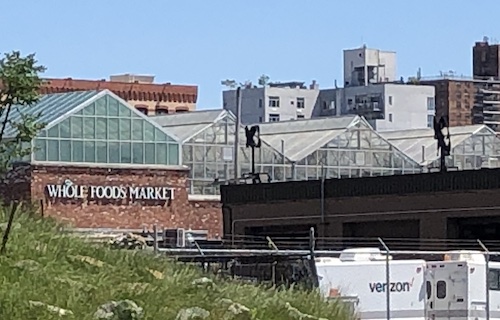
One block south of the park, you can walk or drive across the canal via the (intact) Third Avenue Bridge to a new Whole Foods Market, complete with a covered parking lot with wind-powered lighting. Here is old Brooklyn, this place seems transplanted from an alternate universe.

gowanus waterfront park gowanus canal sponge park brooklyn new york city parks

From a real estate point of view – and New York City is all about real estate, after all – Gowanus Waterfront Park is "the dynamic waterfront park at 365 Bond...the living center of the new canal ecosystem and the Gowanus community."

Take that for what it's worth, but do visit Gowanus Waterfront Park and its spongy appendage. The water is still murky and green, but the evolution continues.

park odyssey 300

Sunday, April 17, 2022

J. Hood Wright Park

It's Lin-Manuel Miranda's world now, and we just live in it. That's why everyone knows about Washington Heights by now, right? Well, as it turns out, this northern Manhattan neighborhood, which I thought I knew pretty well after all these years in New York City, has a large park I wasn't aware of – a park where scenes from the film version of In the Heights were shot.

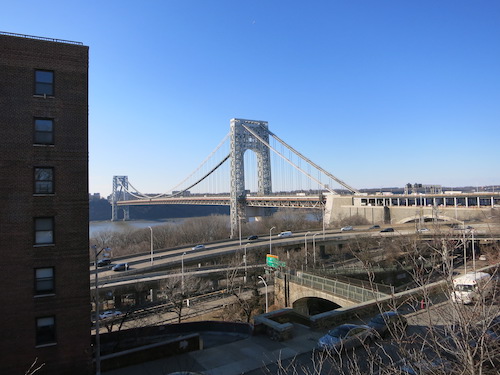
J. Hood Wright Park lies in the West 170s, overlooking the Hudson River and across the island (which is quite narrow up here) from the High Bridge.

This view of the George Washington Bridge from the overlook at the northwestern corner of J. Hood Wright Park will situate you:

j hood wright park washington heights manhattan new york city parks

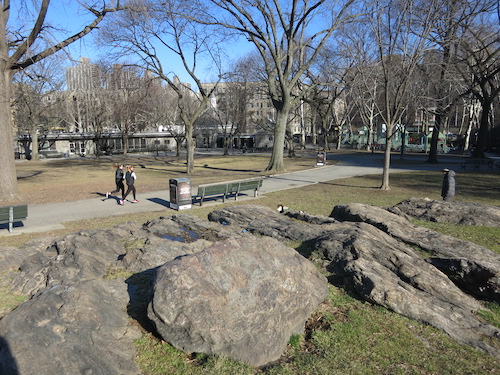
Movie fame aside, the park's most notable features are its outcroppings of Manhattan schist.

j hood wright park washington heights manhattan new york city parks

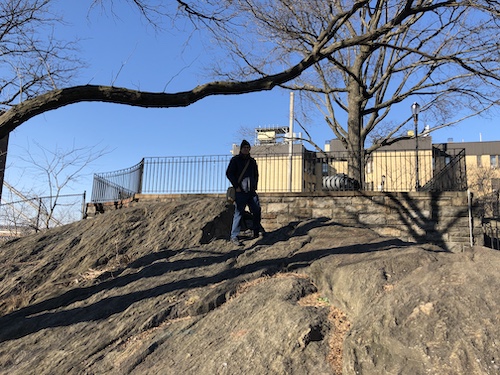
This mysterious gentleman (yes, it's yours truly) can't resist schist outcroppings.

j hood wright park washington heights manhattan new york city parks

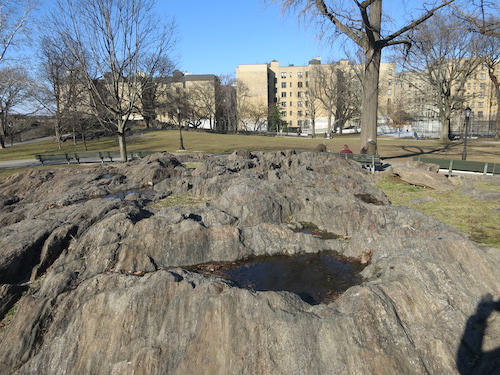
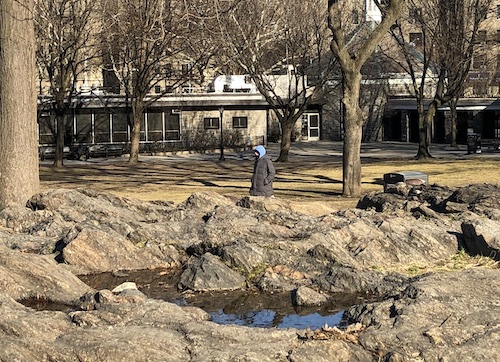
This rock bed even has room for a tiny pond:

j hood wright park washington heights manhattan new york city parks

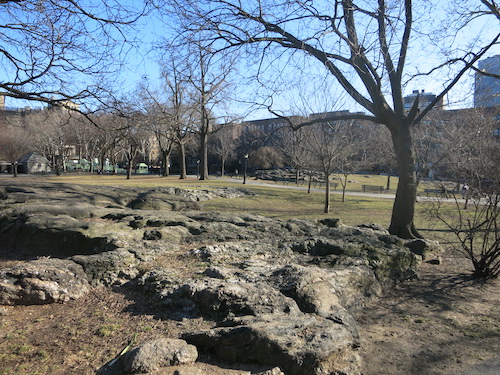
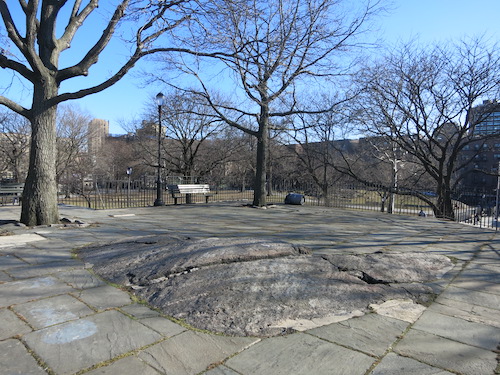
And then there are those that just refuse to get paved over. Schists that resist.

j hood wright park washington heights manhattan new york city parks

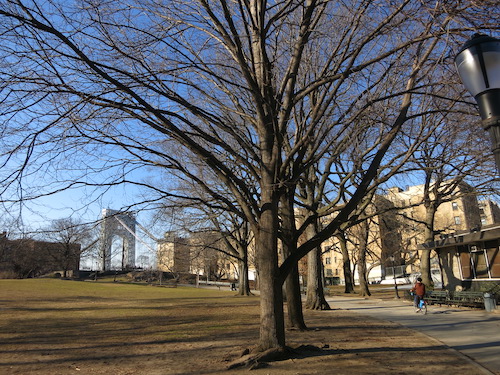
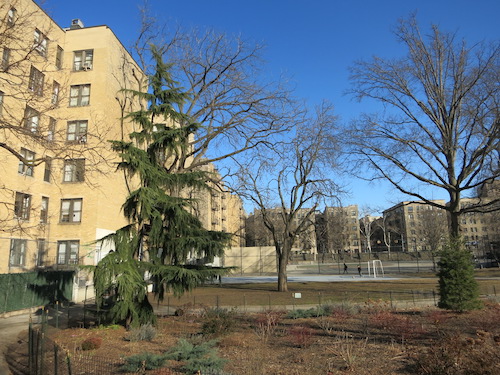
Aside from that, the park is mostly gently undulating terrain of grassy fields and trees. (Bare, since it was February, except for the occasional evergreen.)

j hood wright park washington heights manhattan new york city parks

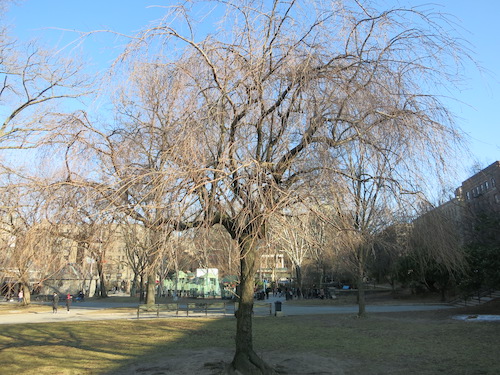
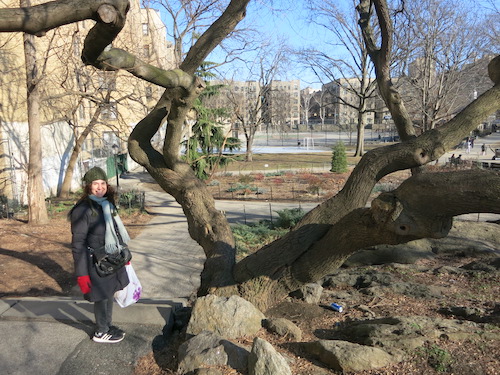
I demanded Mrs. Odyssey pose with this wriggling tree:

j hood wright park washington heights manhattan new york city parks

Up at the overlook towers the sculpture 3000 A.D. Diffusion Piece by Terry Fugate-Wilcox. Installed in 1974, it bides its time here for the year 3000, by which point its magnesium and aluminum plates are expected to have diffused – that is, fused together. As Radiolab's Jad Abumrad described the piece back in 2011 (when it was slightly less diffused):

"It’s about 30 feet tall and it’s driven down about 150 or 200 feet into this hard, ancient bedrock that can survive a nuclear blast." He added, "There’s something about living in a city like New York where the only constant is change, and then sitting in this park and looking at this sculpture with a quality of timelessness."

True. But to me, it's the schist itself, the bedrock, that suggests timelessness.

Because it's so high and narrow, the sculpture is tough to get a picture of. Even the artist's own website almost throws up its hands at the task. But that's OK – it's not exactly a thing of beauty.

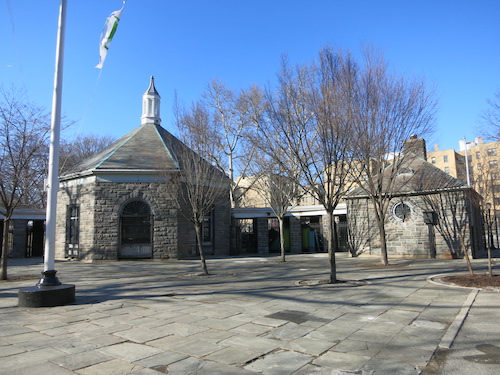
Beautiful, though in their humble way, are the stone structures that house bathrooms, park offices, and recreation centers in many New York City parks. Like this hexagonal one, here at J. Hood Wright.

j hood wright park washington heights manhattan new york city parks

Part of the J. Hood Wright Recreation Center, it dates from 1936, 11 years after the city acquired the land for a park. (Its cupola was restored in 2013.) The acreage had been owned by Hood, a banker (Drexel, Morgan & Co.), philanthropist, and "railroad reorganizer" (whatever that is), who had begun as a dry goods clerk in his native Philadelphia. He lived in a mansion at 175th Street and Haven Avenue, according to the Parks Department website.

Hood applied some of his wealth toward the public good – a library, a hospital – but arguably even more important was his donation of his land, so that it could eventually become this nice 6.7-acre park with really fun terrain.

All photos © Critical Lens Media

park odyssey 300

Sunday, September 12, 2021

Nameless SoHo Park (Bobby Boles Park)

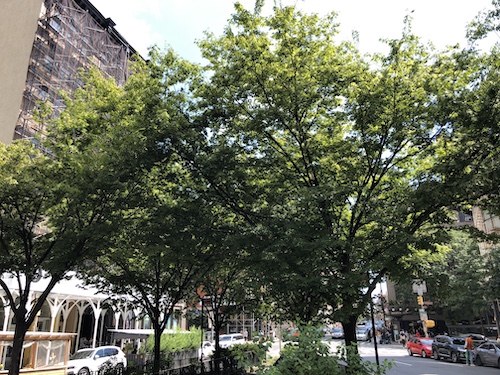
Down in SoHo, at the convocation of Watts, Broome, and Thompson Streets just west of West Broadway, sits a small triangular park – a sliver park, as these tiny oases are sometimes called. As near as my research can determine, it's part of the Parks Department's Greenstreets program, though I didn't notice a Greenstreets sign.

nameless triangle park soho manhattan new york city parks

Forgotten New York explains that the island is a "result of latter-day street engineering, as prior to 1905 or thereabouts, Watts ended its eastern progress at Sullivan, but then it was extended to meet Broome just west of W. Broadway, creating the triangle."

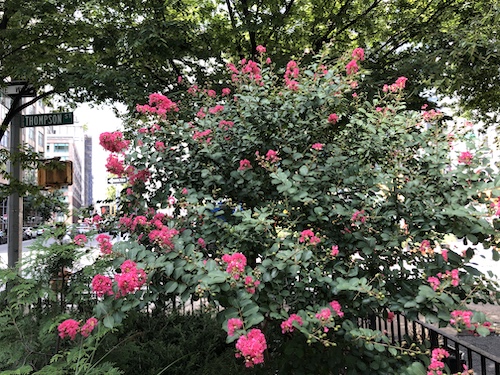
Forgotten New York doesn't explain, and I can't tell you either, why the little park didn't get a name when, around the turn of the 21st century, it was landscaped with patterned stones, pleasant plantings (including a beautiful crape myrtle), a circle of benches, and a central sculpture. I think it deserves one.

nameless triangle bobby bolles park soho manhattan new york city parks
nameless triangle park soho manhattan new york city parks

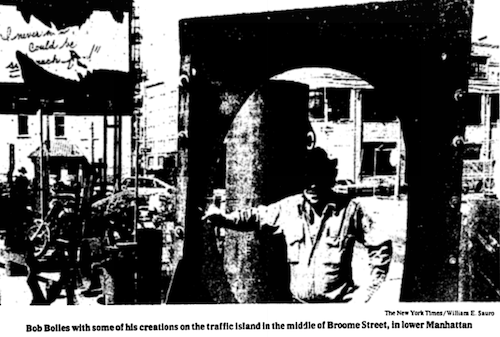
Fortunately, every neighborhood has its chroniclers, you sometimes just have to hunt for them. Soho Memory tells us that the park has been unofficially called Bobby Bolles Park, because before it was turned into a park, sculptor and pro welder Robert S. Bolles, sometimes known as Bob Steel, installed his works here – without permission.

As amNY reported back in 2003, "For years, Bolles' sculptures covered what was then an asphalt traffic island. Bolles, a Gypsy, carved the 'Tree of Life' on the site with a blowtorch from a large metal pipe. It was his last major work before he died in 1980." By then, though, he had received official permission to install his works, according to a 1979 profile by Francis X. Clines in the New York Times. Bolles and his work were notable enough to get a mention in the Fifth Edition (2010) of the AIA Guide to New York City.

nameless triangle park bob bolles soho manhattan new york city parks

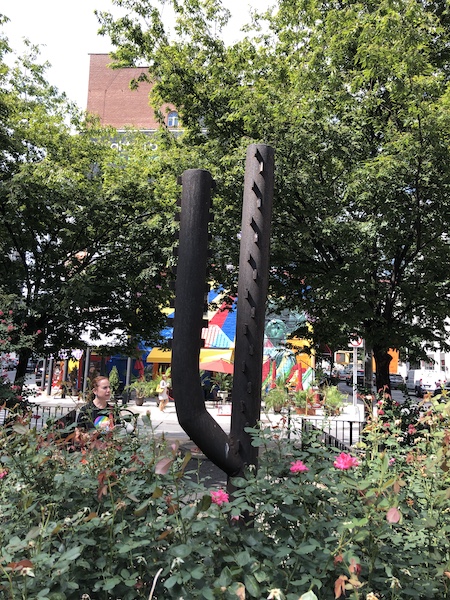
The city removed the sculptures when it made the park, but it seems one was re-installed, and in a place of honor. From what I've read of the "Tree of Life" sculpture, this isn't that one, but it does look like his work:

nameless triangle park soho manhattan new york city parks

The little park narrows to a point at its eastern end where it stabs West Broadway.

nameless triangle park soho manhattan new york city parks

No, the passions of current politics haven't bypassed this obscure little spot.

nameless triangle park soho manhattan new york city parks

But it's good to be reminded that continuity can sometimes be found if you look hard enough. Sometimes a locally legendary character will, decades on, be memorialized, even if unofficially, in the urban landscape on which he had at one time a notable influence. Bob Bolles didn't live to see the world brought to its knees by COVID-19 in 2020, the Twin Towers fall in 2001, or even the Mets win the World Series in 1986. But in this unnamed little park in SoHo, he lives on.

All photos © Critical Lens Media

park odyssey 300

Thursday, August 19, 2021

Allison Pond Park, Goodhue Park, and Jones Woods Park

park odyssey 300

For vanity's sake I'm loathe to compile multiple parks into one post. Writing one discrete post for each park means not only a fairly accurate count of parks visited but also a maximum marker of pride in how many I've covered.

Still, it makes sense to combine Staten Island's Allison Pond Park and Goodhue Park since I couldn't identify the border separating the two. And I've added Jones Woods Park because it's more-or-less contiguous with Goodhue.

I've been to Sailors' Snug Harbor – officially known today as Snug Harbor Cultural Center & Botanical Garden – numerous times, both for leisurely visits and to review productions by the late lamented Harbor Lights Theater Company. I never knew or noticed that a large park lay just across the street to the south. Until this year, that is, when a neighbor clued me in. I looked on a map and lo and behold, there it was. Or rather, there they were.

Allison Pond Park

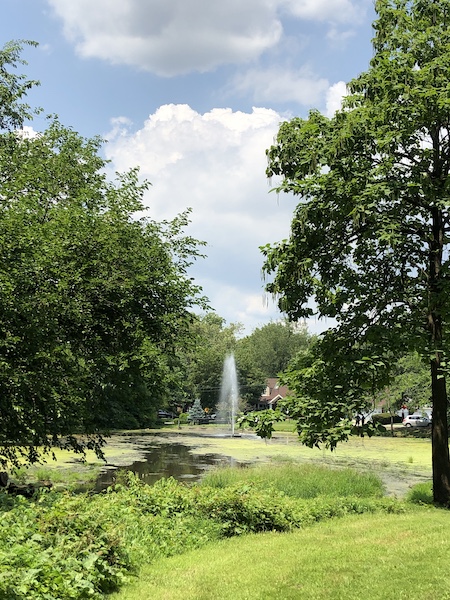
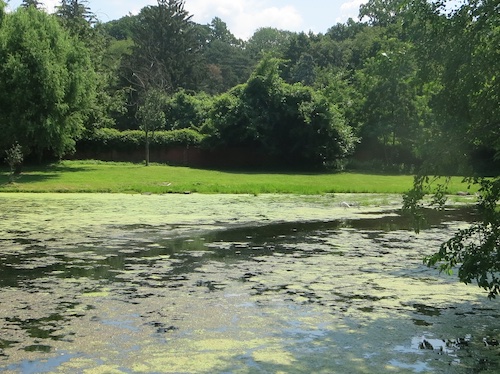
Entering Allison Pond Park from Prospect Avenue, you immediately face an excellent prospect: the pond itself, graced by a gracious fountain and paddled by the largest turtles I've ever seen in a New York City park.
allison pond park goodhue park staten island new york city parks
allison pond park goodhue park staten island new york city parks turtle

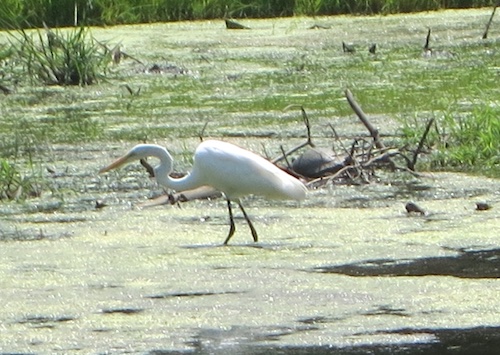
An egret, too, posed conveniently on our recent visit.
allison pond park goodhue park staten island new york city parks egret

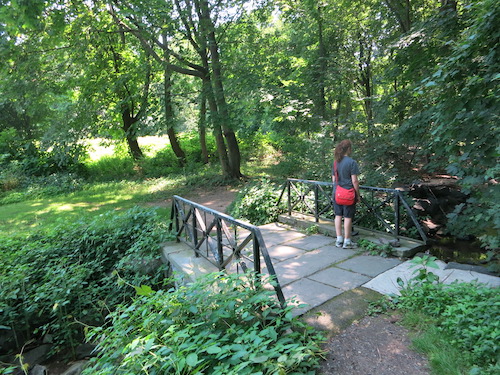
Venturing beyond the pond, one finds the Allison Pond Park Trail well maintained.
allison pond park goodhue park staten island new york city parks

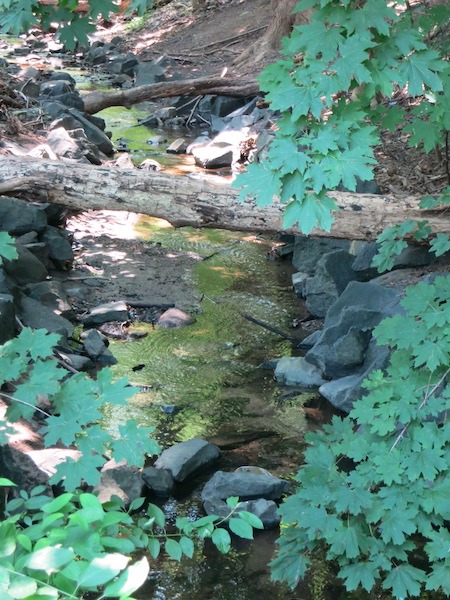
You can easily feel like you're in a remote forest as you gaze at Harbor Brook.
allison pond park goodhue park staten island new york city parks

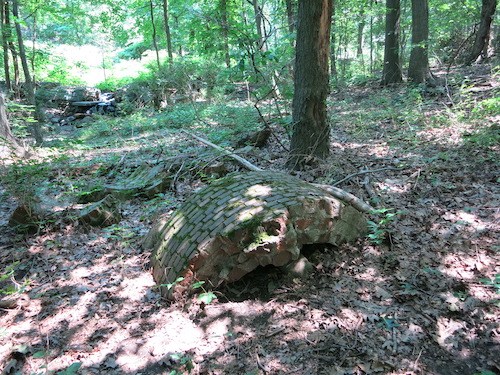
Still there are plenty of signs this is anything but a virgin forest.
allison pond park goodhue park staten island new york city parks

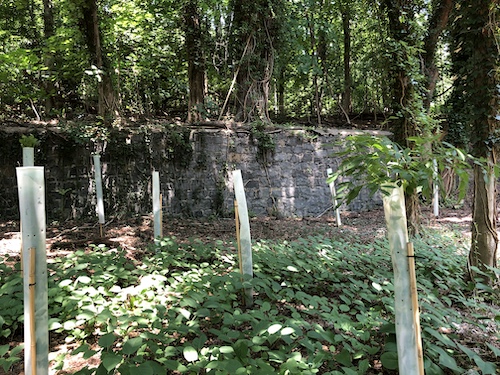
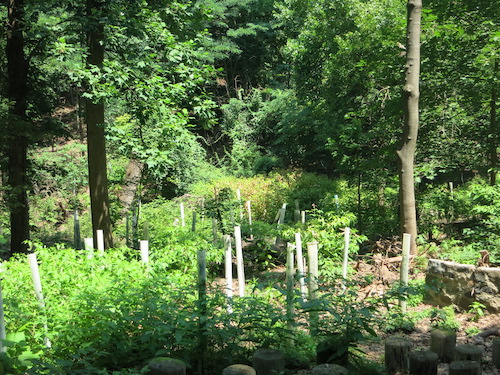
And speaking of virgins, both Allison Pond Park and Goodhue Park were festooned with recently planted saplings protected by plastic tubes.
allison pond park goodhue park staten island new york city parks

George William Allison (1888-1939) was an engineer who, as Borough Works Commissioner, supervised all of Staten Island's Works Progress Administration (WPA) projects beginning in 1934. According to SI Live, these New Deal programs employed 19,000 Staten Islanders.

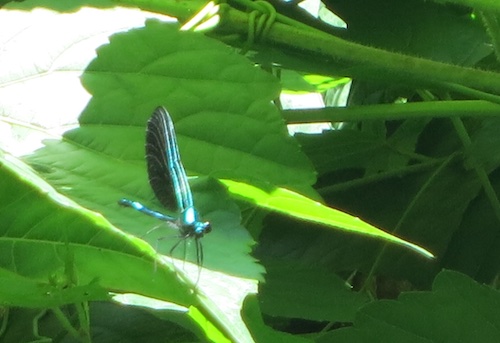
The park that bears his name was once part of Sailors' Snug Harbor, at the time a home for retired sailors. Allison Pond itself, according to Forgotten New York, is "small glacial leftover that once provided water" to nearby Snug Harbor. The pond, along with the surrounding area through which the brook flows, officially became New York City parkland in the 1940s. The city renovated Allison Pond Park in 1990.
allison pond park goodhue park staten island new york city parks

Goodhue Park

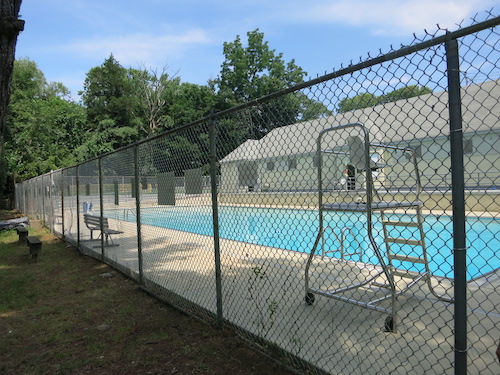
allison pond park goodhue park staten island new york city parksJonathan Goodhue bought and began developing the property in 1841, building his Woodbrook Mansion. In 1912 his descendant Sarah Parker Goodhue (1828-1917), "a grande dame of Gilded Age New York City" who with her husband collected art treasures in Europe and the U.S., donated the land to the Children's Aid Society, which operated a summer camp and an agricultural camp for girls here. Goodhue Park is still partly managed by the Society, which today oversees athletic fields and an outdoor swimming pool among other facilities.

The city began acquiring the property in 2009, a few years after the Society announced it needed to sell the land in order to survive here. The purchase came in stages, with funds allocated for a third parcel in 2017 after community action against a sale to private developers. The arrangement seems to have worked out OK, with the Society continuing to manage activities here.
allison pond park goodhue park staten island new york city parks

The friendly pool manager told us that some young teenagers had recently been caught vandalizing the saplings. This appetite for destruction is almost inconceivable to me, as it was to him. The kids were punished for it, but – lesson learned? Who knows.

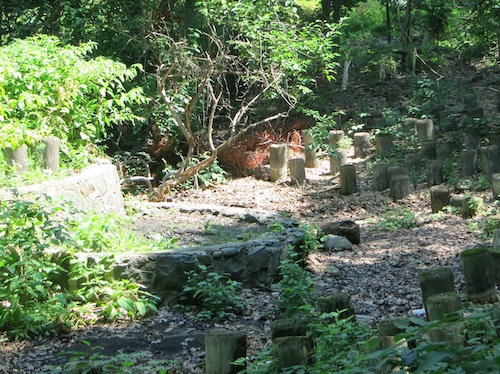
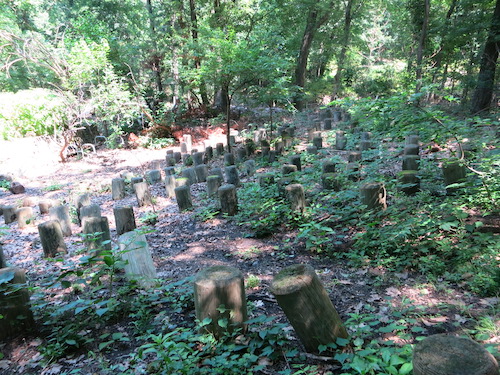
Goodhue Park has more to recommend it than trees, forest trails and turtles. This weird thing, for example:
allison pond park goodhue park staten island new york city parks

I couldn't figure out what it was. What were all these stump things? Was it some weird pagan ritual site?

Mrs. Odyssey spotted the key structure. It's in the sunlight in the following photo.
allison pond park goodhue park staten island new york city parks

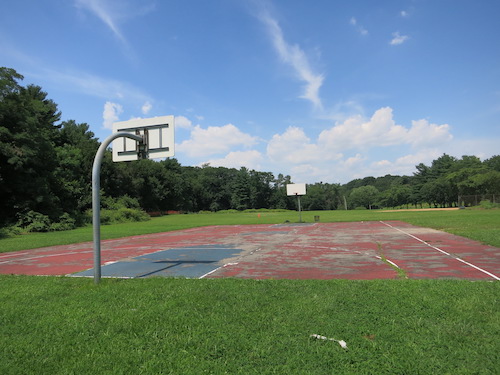
It's hard to make out, so I'll just tell you: It's a stage. This is an amphitheater, which like most of the park's manmade features is a holdover from past Children's Aid Society activities. Overgrown, mossy, but right there by the trail. In an SI Live post with many photos, Tom Wrobleski reports counting about 200 seats.

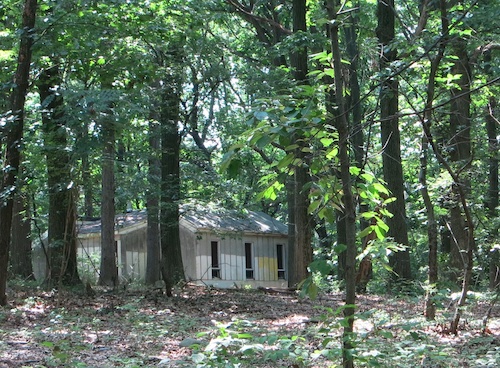
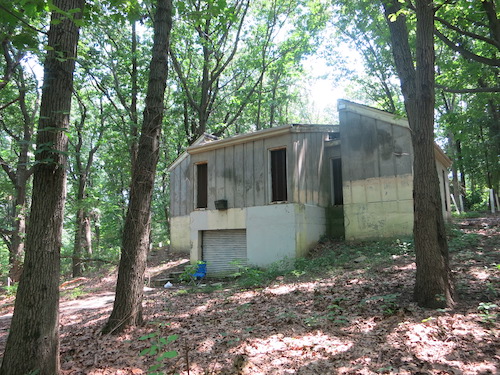
More holdovers hide in the woods atop a steep climb.
allison pond park goodhue park staten island new york city parks

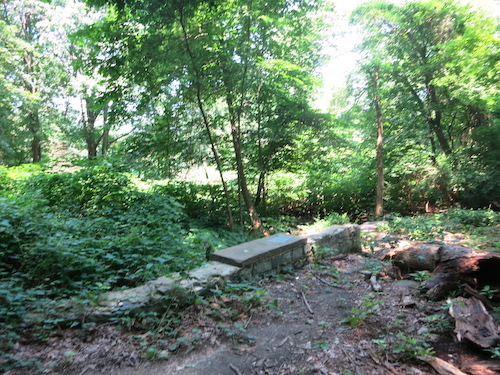
Three abandoned structures also date from the Children's Aid Society's heyday here.
allison pond park goodhue park staten island new york city parks

This sort of find is the kind of thing that you don't encounter in any other borough of New York City. Staten Island is a weird, wild world unto itself.

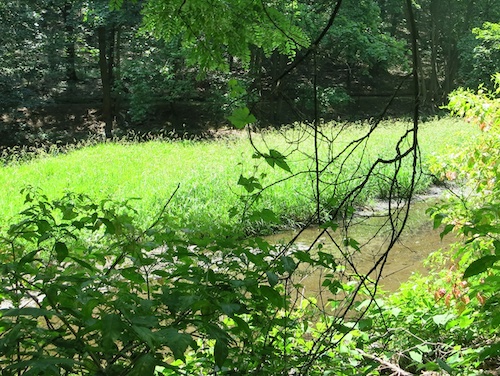
Harbor Brook runs through the ravine below the hills. As another SI Live post explains, it "drains the area from Jones Woods Park and the surrounding hillsides southward. As it exits Goodhue, the brook continues through Allison Pond Park. A culvert from Allison Pond leads to the stream in Snug Harbor and hence to the Kill van Kull." Yes, it's all connected.
allison pond park goodhue park staten island new york city parks

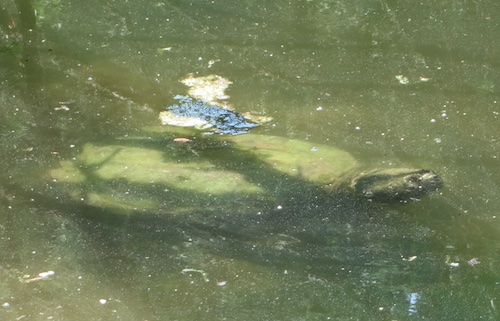
The large reptiles here, again per SI Live, are snapping turtles. They're shy and slide into the water if you come near.
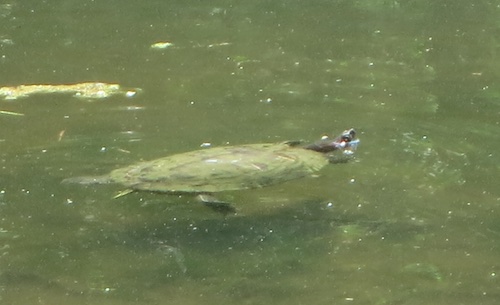
allison pond park goodhue park staten island new york city parks snapping turtle

It wouldn't be a Staten Island excursion without an encounter with at least one ungulate. This deer was nosing around a Children's Aid Society building at the edge of Goodhue Park.
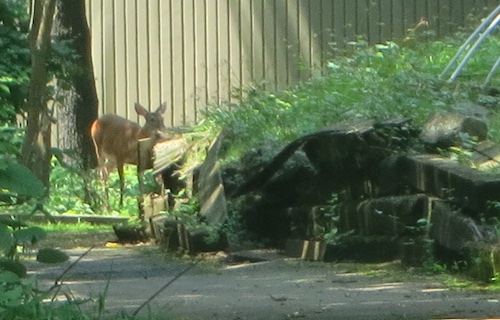
allison pond park goodhue park staten island new york city parks deer

Jones Woods Park

A short trail runs into the abovementioned Jones Woods Park, some of which is dense inaccessible forest.
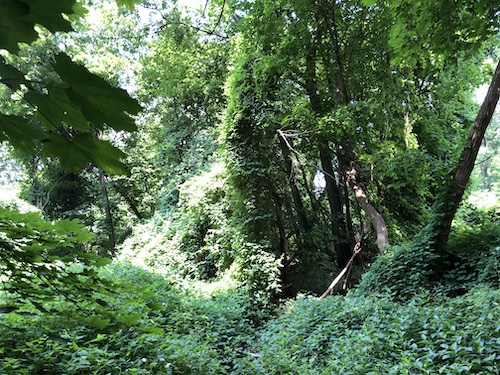
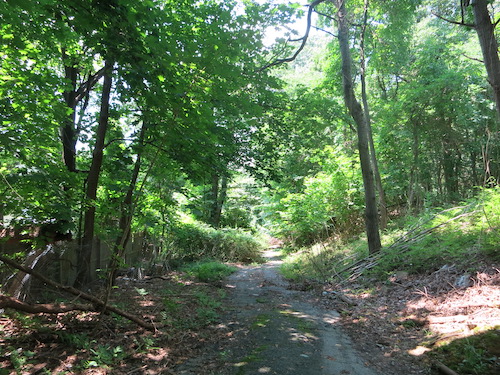
allison pond park goodhue park staten island new york city parks

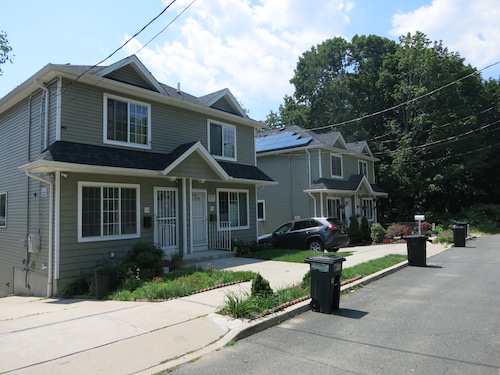
Soon the trail disgorges you onto a semi-hidden street, fenced off from the rest of the park.
allison pond park goodhue park staten island new york city parks

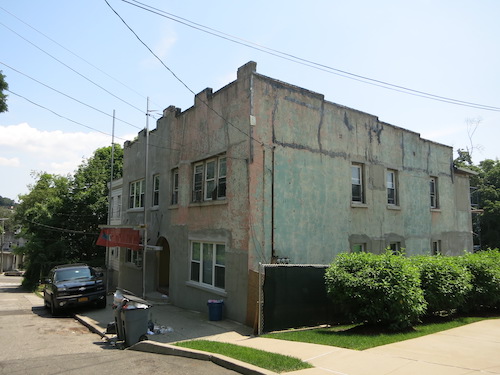
There's one strange old blocky building. Abandoned?
allison pond park goodhue park staten island new york city parks

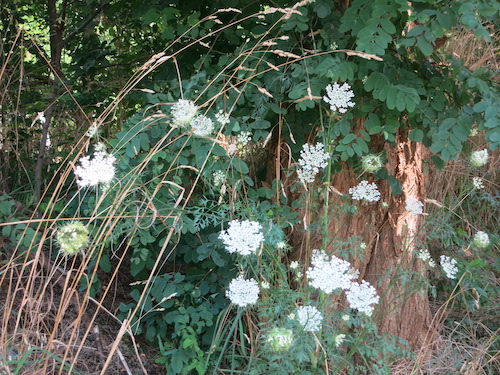
On the other side of the street rises the mysterious part of Jones Woods.
allison pond park goodhue park staten island new york city parks

Jones Woods Park came down to us from stockbroker and entrepreneur Shipley Jones, whose estate here was known as The Cedars, according to real estate writer Anthony Licciardello. Jones died in 1936, after which developers began to sniff around.

Like Goodhue Park, Jones Woods was saved from development thanks to a movement to preserve the land that progressed in stages, beginning in 1996. The city paid $17 million for it.

I've seen blog posts (like this one) and photos that suggest there's another entrance to Jones Woods Park from another side. If there's access we didn't reach, we'll get to it next time and I'll update this post.

All photos © Critical Lens Media